For many women, maintaining a steady weight becomes harder with age. If you’ve noticed the scale creeping up during menopause, you’re far from alone, and it isn’t something you have to accept. Whether you’re just entering this stage or have been struggling with weight gain for a while, there are practical steps you can take to prevent further gain and lose weight.
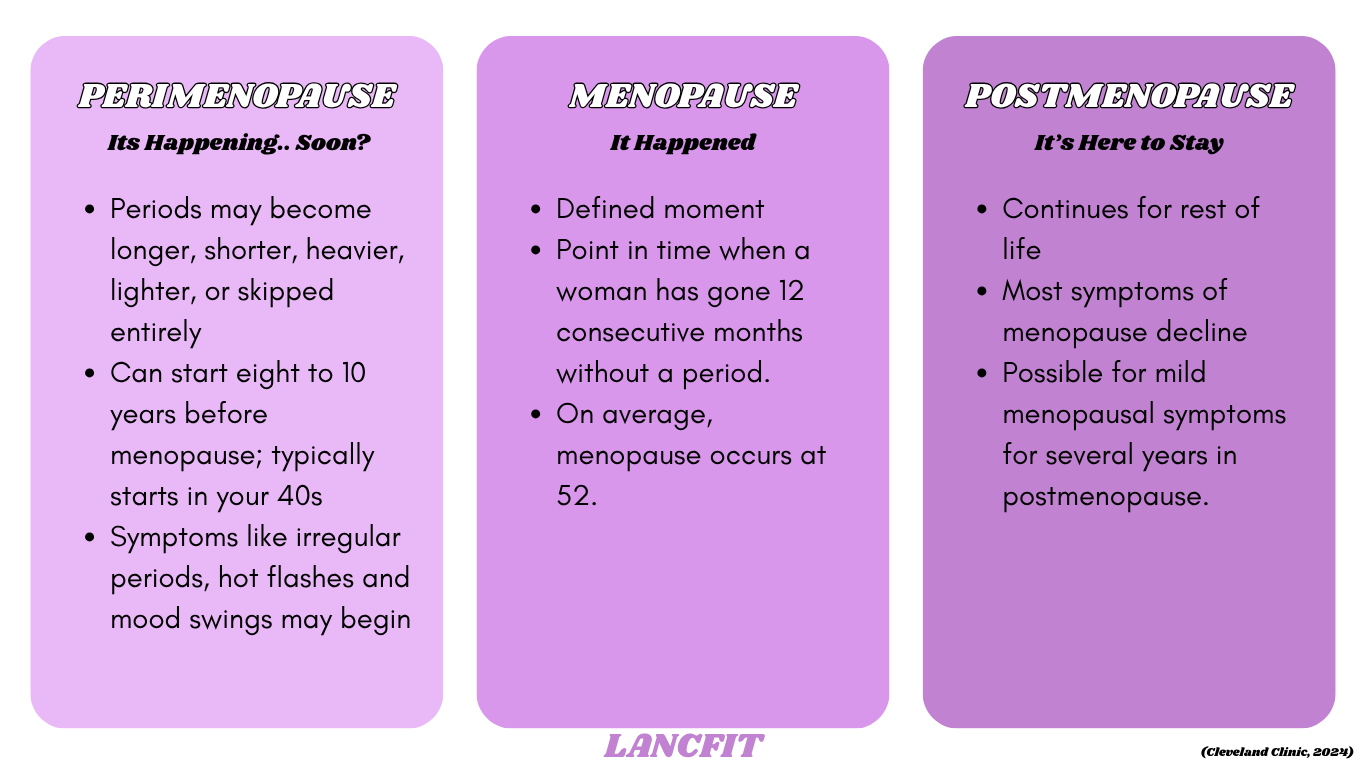
The Stages of Menopause
Why Does Weight Gain Happen During Menopause?
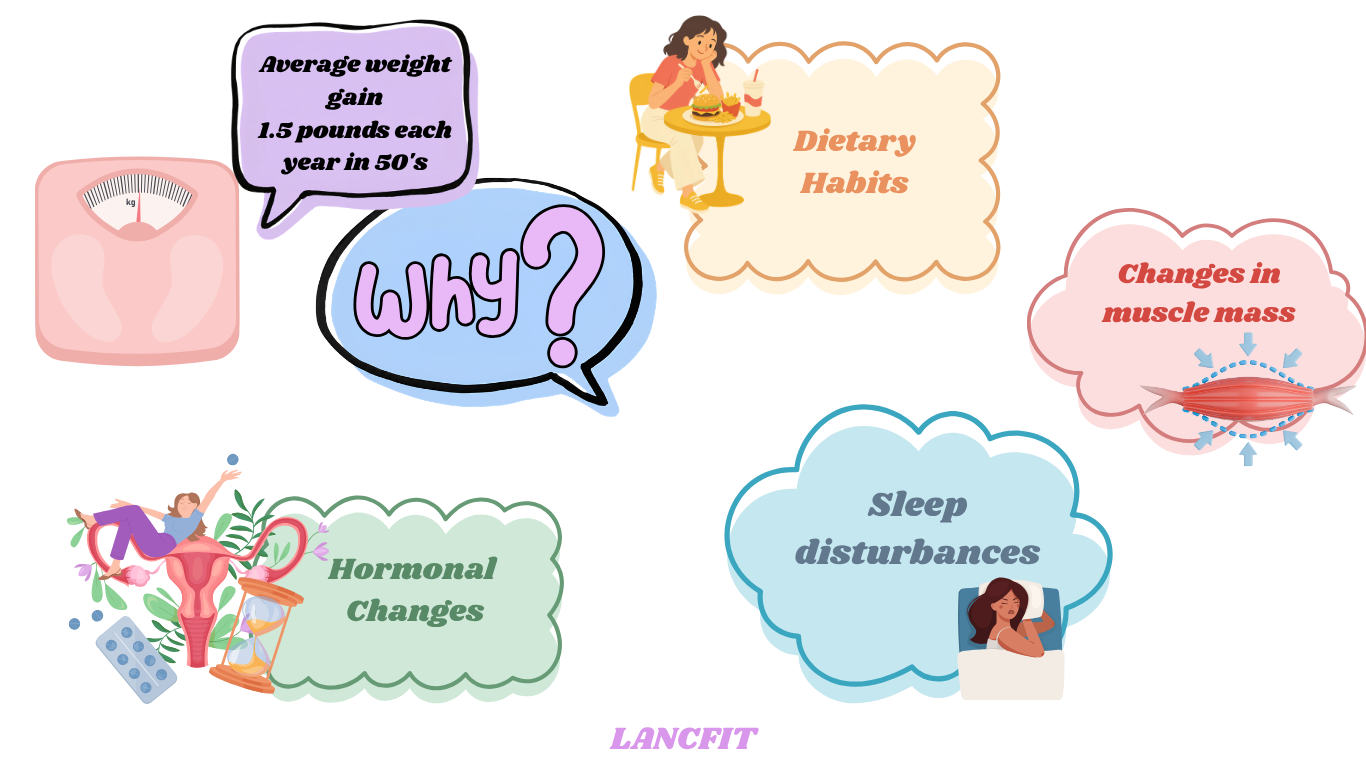
Weight gain is common during both perimenopause (the transition leading up to menopause) and menopause, affecting an estimated 60%-70% of midlife women. On average, women continue to gain about 1.5 pounds per year through their 50s (Mayo Clinic Staff, 2026; Kodoth et al., 2022).
There is rarely a single cause. Midlife weight gain comes from a combination of hormonal, physical, and lifestyle changes.
Hormonal Changes
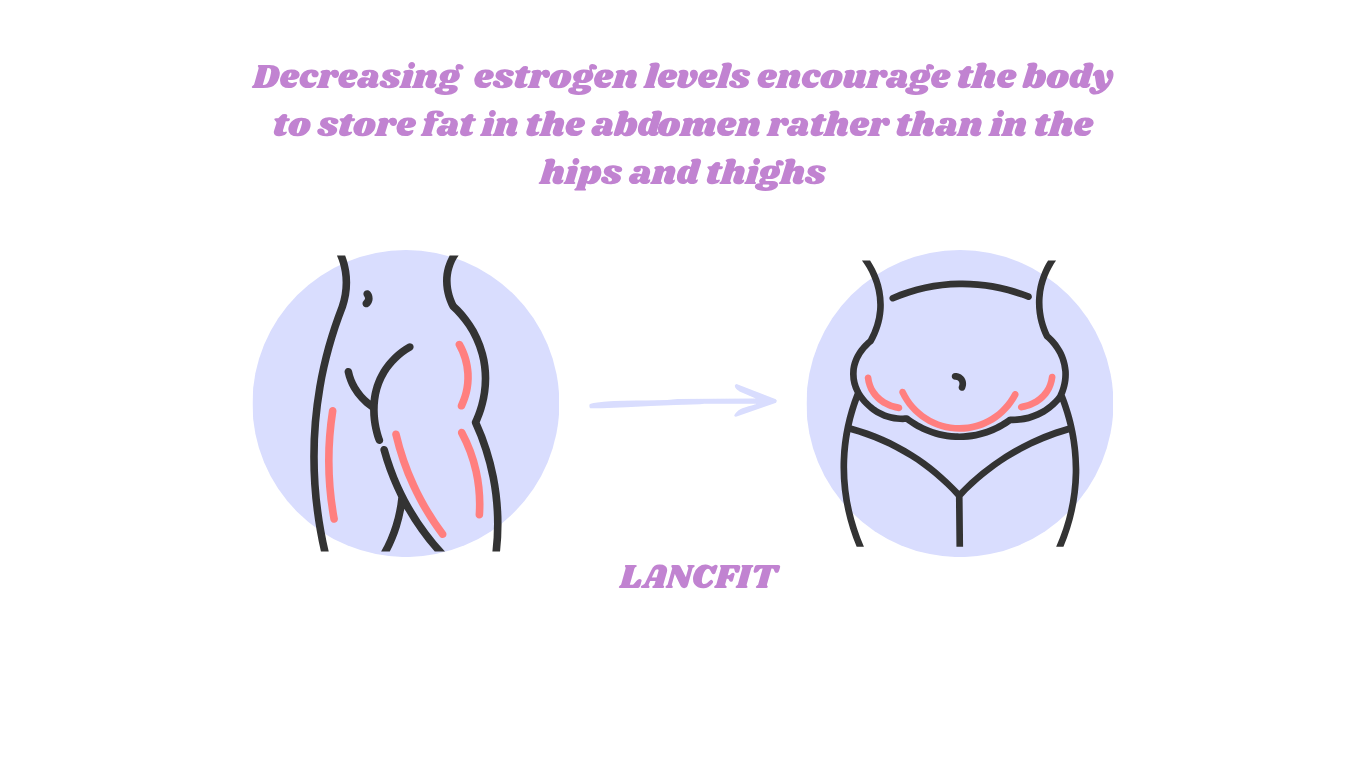
Changes in estrogen levels encourage the body to store fat in the abdomen rather than in the hips and thighs (Mayo Clinic Staff, 2026). Hormones alone don’t necessarily cause weight gain, but they help explain why you may be seeing fat in places you never did before.
Muscle Mass
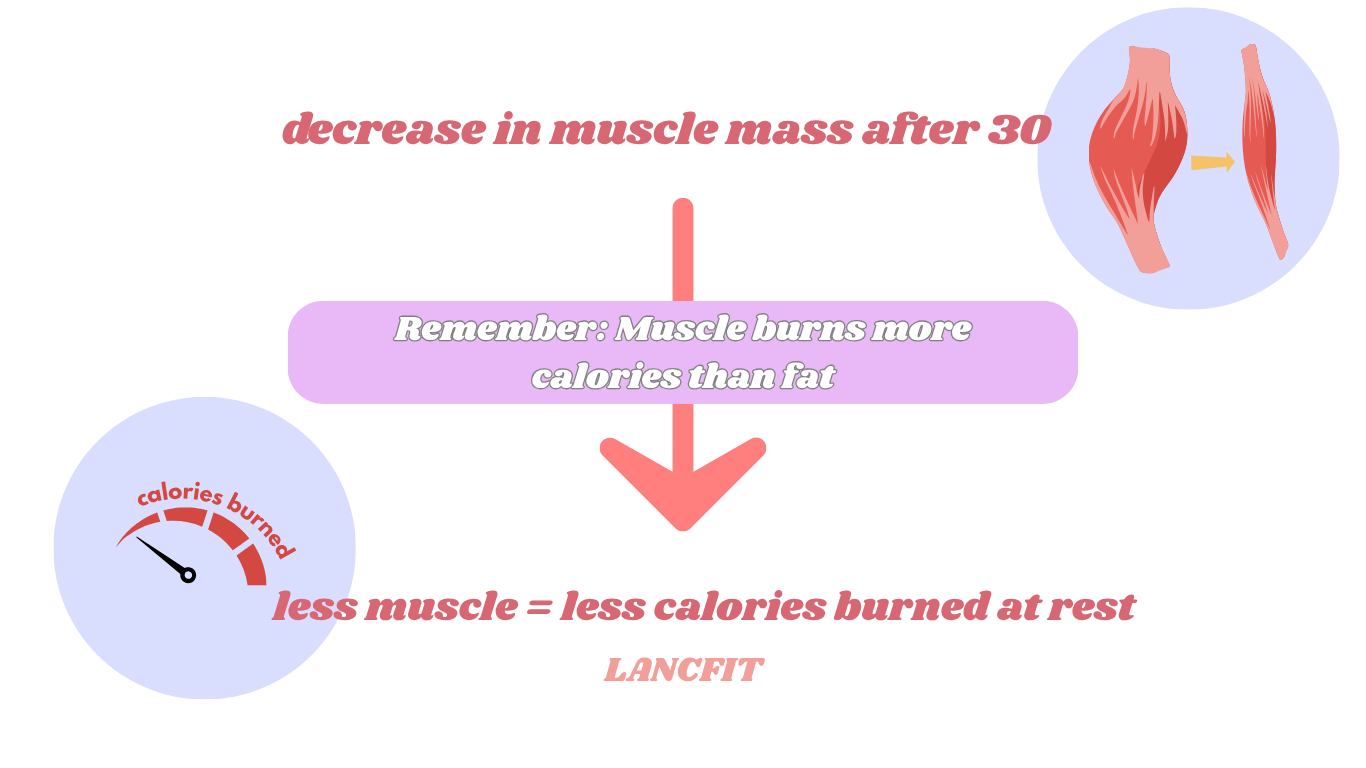
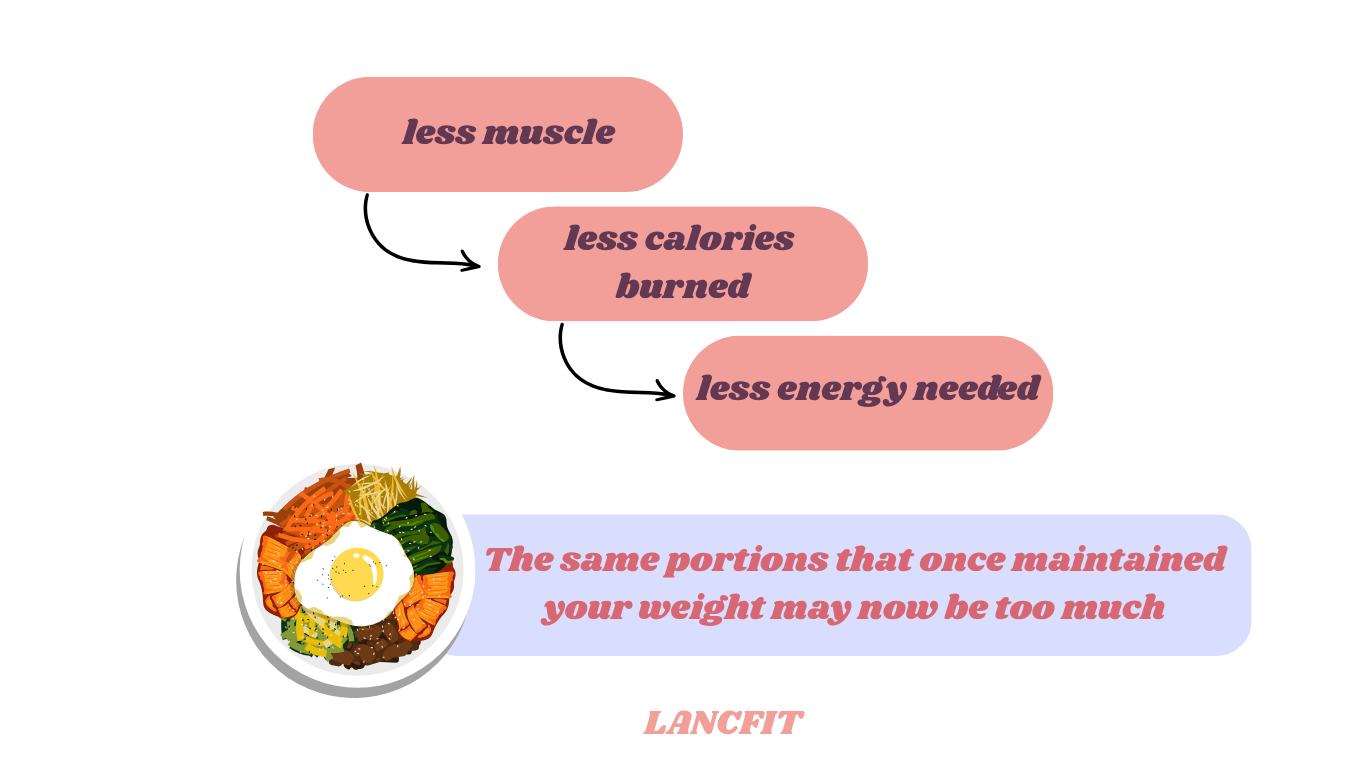
Women naturally lose 3% to 8% of their muscle mass per decade after age 30. Because muscle burns more calories at rest than fat does, less muscle means fewer calories burned throughout the day (The Menopause Society, 2025).
Dietary Habits
As muscle mass and energy expenditure decline, some women don’t think to adjust how much they eat. The diet that once kept your weight stable may no longer match your body’s new basal metabolic rate, which is the number of calories it burns at rest (The Menopause Society, 2025).
Sleep
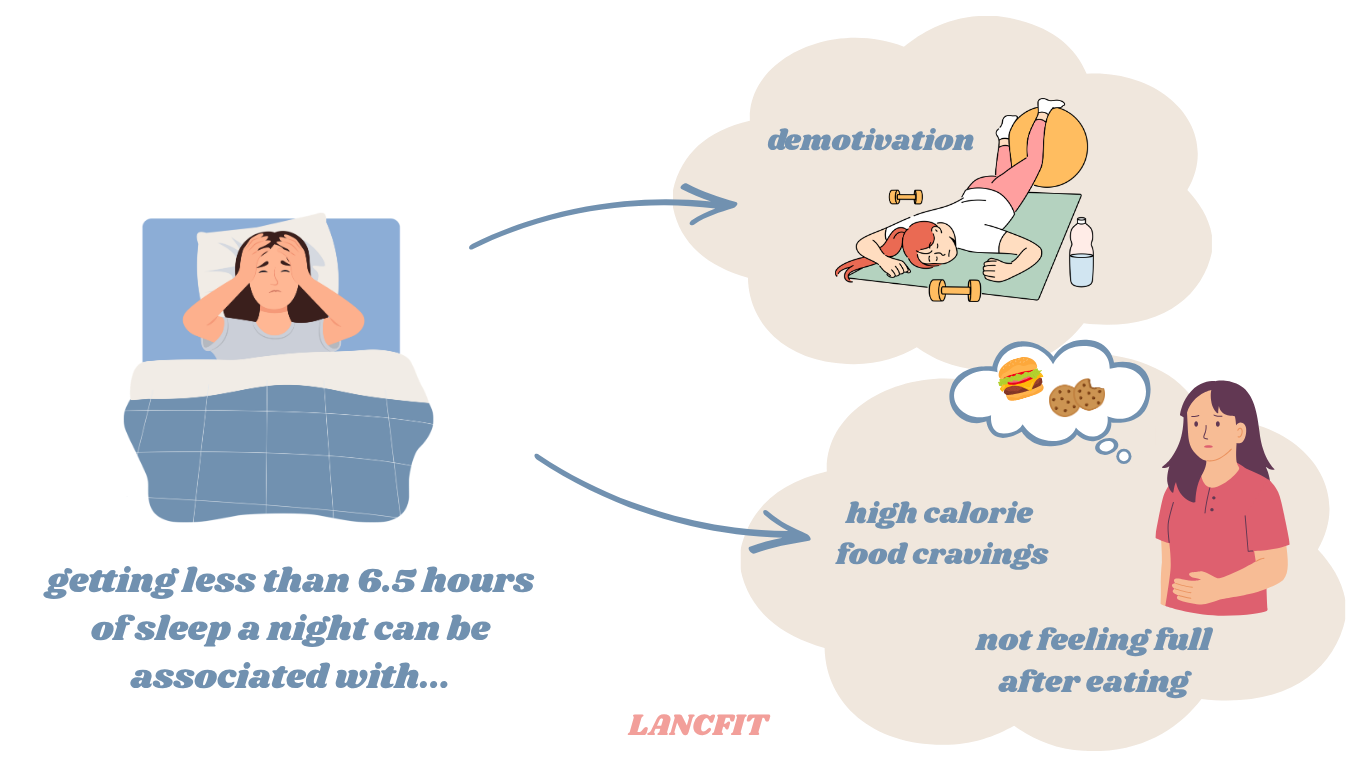
Sleep plays a bigger role in weight management than you might think. A 2022 study found that people who slept less than 6.5 hours per night tended to eat more calories and gain more weight than those who slept longer. Poor sleep may also disrupt the hormones that regulate hunger and fullness. Ghrelin, which increases appetite, can rise, while leptin, which signals fullness, can fall. The result may be more hunger and stronger cravings for high-calorie foods, particularly those high in carbohydrates and fat (DePolo, 2026).
Combating Stubborn Weight Gain
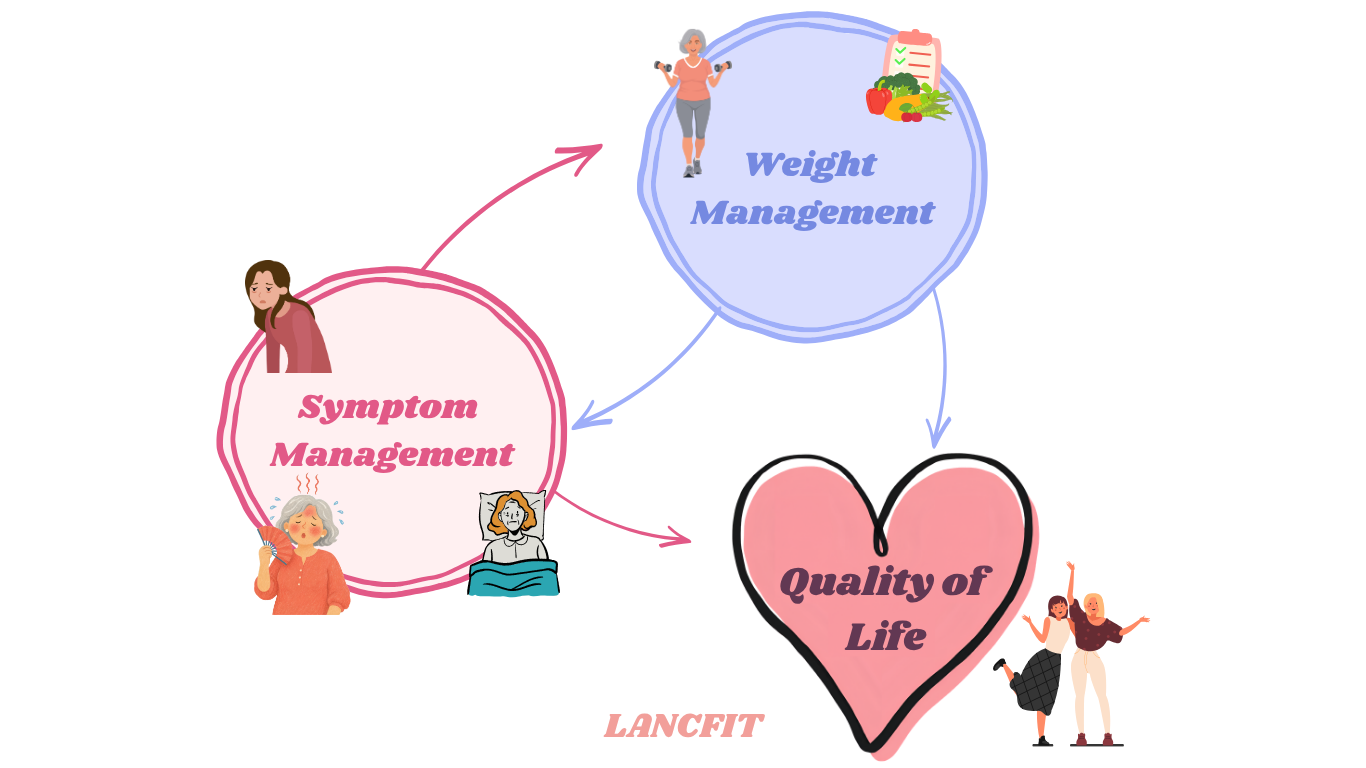
Fortunately, we live in a time with more options than ever for tackling weight gain. A good place to start is with the cycle itself. Managing your symptoms can improve your quality of life and make it easier to stay consistent with the habits that support weight loss. The connection runs both ways, too. Many of the steps that help you lose weight can also ease your symptoms.
Get MovinG
Even the thought of exercising may feel excruciating when hot flashes and other menopause symptoms are part of your day. But regular movement does more than support a healthy weight. It can also ease some of those symptoms (Cleveland Clinic, 2024).
Exercise can also help create a calorie deficit and limit midlife weight gain. But how much you move throughout the day matters just as much as your scheduled workouts, if not more. See my blog post on increasing your total daily calorie burn!
“The best exercise for losing menopausal weight is the one you’ll actually do”
How Much Exercise Do You Need?
For most adults, experts recommend at least 150 to 300 minutes a week of moderate aerobic activity, such as brisk walking. Or you can do at least 75 to 150 minutes a week of vigorous aerobic activity, such as jogging. A combination of the two works, too (The Menopause Society, 2025).
Experts also recommend strength training at least twice a week. It’s especially valuable now because bone density declines with menopause. It also supports weight management: as you gain muscle, your body burns more calories, which makes it easier to maintain a healthy weight (Mayo Clinic Staff, 2026).
Before You Begin
Talk with your physician before starting an exercise program. Medications and existing health conditions can change what a program should look like for you. Once you’re cleared, start slowly with activities you can do comfortably, then build from there. A support system helps, too. Invite a friend to start with you, work with a personal trainer, or share your goals with a loved one.
-
Knowing your target heart rate range helps you work hard enough to benefit without overdoing it.
Find your target heart rate
Estimate your maximum heart rate by subtracting your age from 220.
Multiply your maximum heart rate by 50% and 80% to find your target range.
As you progress
Just starting out: aim for about 50% of your maximum heart rate.
As your fitness improves: gradually work toward 75–80%.
After six months or more of regular exercise: some people may be able to safely exercise at up to 85%.
Example: a 50-year-old
220 − 50 = 170 beats per minute (maximum heart rate)
50% = 85 bpm
80% = 136 bpm
Estimated target range: 85–136 bpm
DIETARY CHANGES
Whether you want to lose, gain, or maintain weight, your body follows the first law of thermodynamics: energy can’t be created or destroyed, only converted from one form to another. The calories you eat are energy, and whatever your body doesn’t burn for fuel gets stored, mostly as body fat.
Women may need about 200 fewer calories a day in their 50s than they did in their 20s and 30s, especially if they’re less active than they used to be (DePolo, 2026). Still, calorie needs depend on many factors, including age, weight, height, and activity level. A registered dietitian can create a plan tailored to you, and a personal trainer can offer general guidance and help you build an exercise routine that supports your goals.
Check your sweets
Added sugars account for nearly 300 calories a day in the average American diet, so they’re worth a closer look (DePolo, 2026).
Choose whole foods
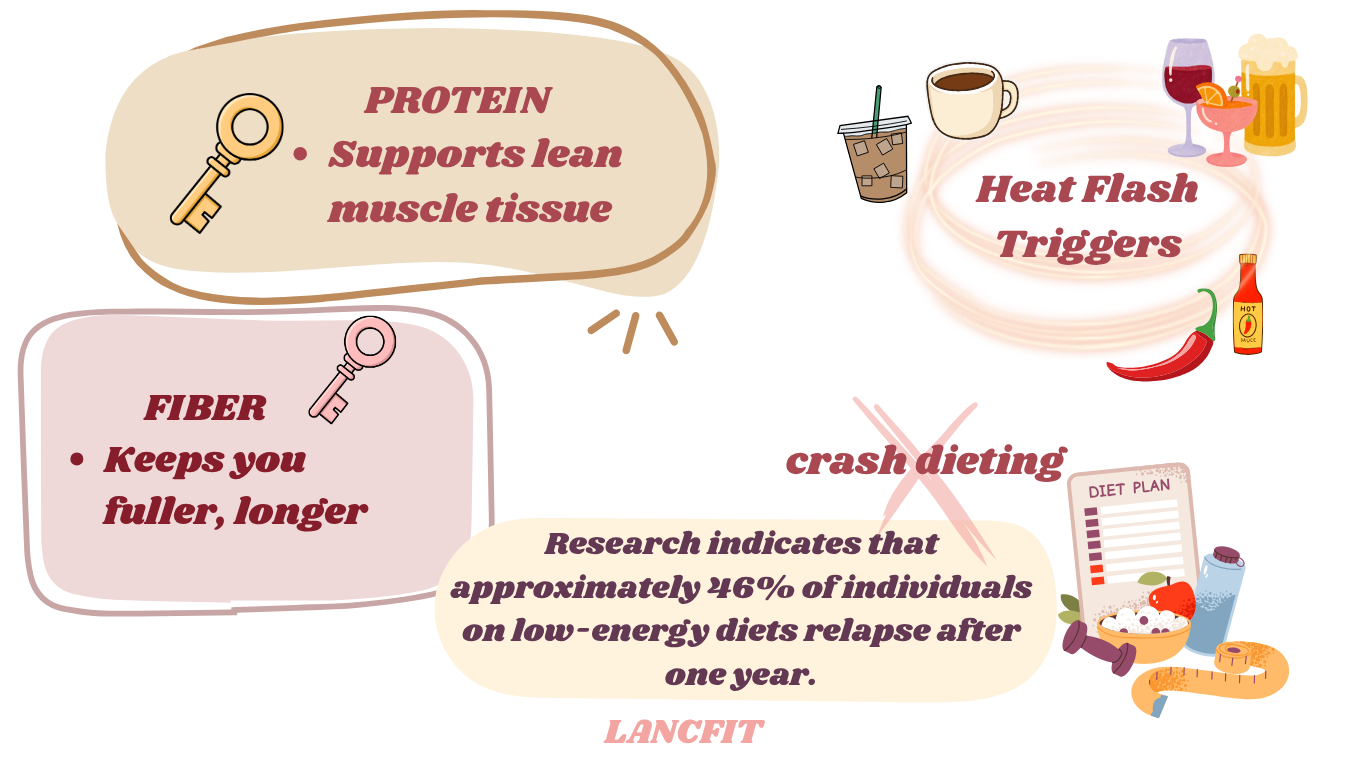
Fruits, vegetables, beans, whole grains, and nuts are nutrient dense, meaning they pack plenty of vitamins, minerals, healthy fats, and protein into every calorie, without the added sugars and unnecessary ingredients found in many processed foods. They’re also excellent sources of fiber, which supports digestion, keeps you feeling full, helps regulate blood sugar, and benefits heart health. For a deeper dive, check out my blog post on whole foods.
Prioritize protein.
To keep or build muscle, aim for about 0.45–0.54 grams of protein per pound of body weight each day, along with regular exercise. For a 150-pound woman, that’s roughly 68–81 grams. Keep in mind that protein alone won’t cause weight loss. To lose weight, you still need to take in fewer calories than you burn (Erdélyi et al., 2023).
Skip the crash diet
Very low-calorie diets of 800–1,000 calories a day rarely lead to lasting habits or sustainable weight loss. Research suggests that after one year, about 46% of people on low-energy diets had relapsed (Kodoth et al., 2022).
Know your triggers
Alcohol, caffeine, and spicy foods can set off hot flashes in some women, but triggers vary, so it helps to track your own patterns. Alcohol also adds calories, so cutting back may help with both hot flashes and weight (Cleveland Clinic, 2025).
Food for thought: In one study, women who followed a Mediterranean diet were 20% less likely to have hot flashes and night sweats. This way of eating centers on plant-based foods and healthy fats, and it’s widely considered one of the healthiest ways to eat (Cleveland Clinic, 2025)
Hormone Therapy and Hormone Replacement Therapy
Hormone treatment goes by two names, and which one you hear can depend on when menopause happens:
Hormone therapy (HT): Treatment used to manage menopause symptoms when menopause occurs at the typical age (Cleveland Clinic, 2024).
Hormone replacement therapy (HRT): Treatment used when menopause occurs at a younger age, especially before age 40 (Cleveland Clinic, 2024).
In practice, the two terms are often used interchangeably, so you may see either one.
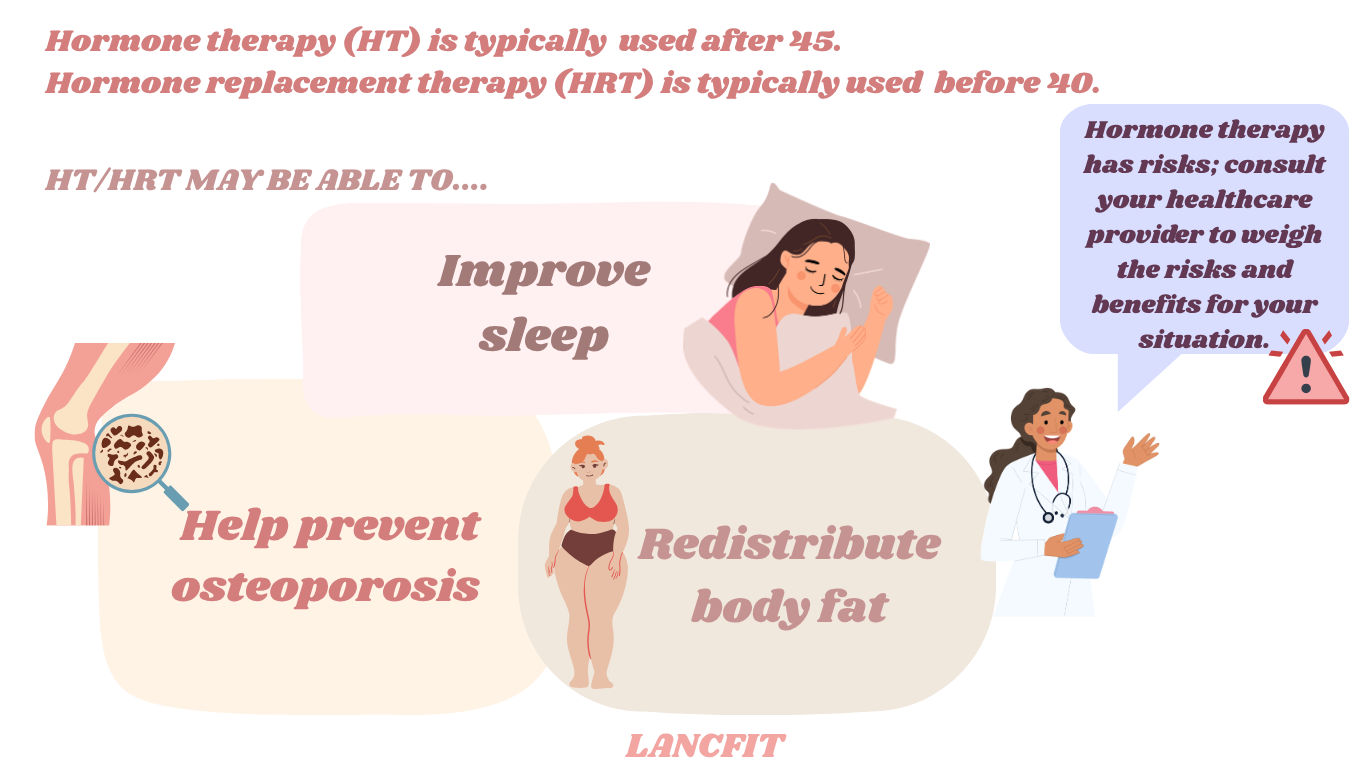
Hormone therapy hasn’t been shown to cause weight loss, but it may influence where your body stores fat. It may also support weight management by improving sleep, which can benefit metabolism and make healthy habits easier to stick with. Hormone therapy can also help prevent osteoporosis (Mayo Clinic Staff, 2026; Cleveland Clinic, 2024).
There are two main types of hormone therapy:
Estrogen therapy (ET): Uses estrogen alone and is usually prescribed for women who no longer have a uterus. It comes as a pill, patch, gel, spray, cream, or vaginal ring, and is generally prescribed at a low dose.
Estrogen-progestogen therapy (EPT): Combines estrogen with a progestogen, either progesterone or a synthetic version called progestin. Women who still have a uterus take it because estrogen alone can thicken the uterine lining, and the progestogen protects against that (Cleveland Clinic, 2024).
Hormone therapy also carries risks, which can vary with your age, health history, and the type of therapy. Talk with your health care provider about the risks and benefits to decide whether it’s right for you.
GLP-1 Medications
If lifestyle changes aren’t enough, prescription anti-obesity medications such as GLP-1s can lead to significant weight loss, up to about 20% of body weight. However, these medications may need to be taken long term, because stopping them often leads to weight regain (The Menopause Society, 2025).
For more insight, check out my blog post on GLP-1 medications.
Conclusion
Weight changes during menopause are common, and they don't mean you’re doing anything wrong. Shifting hormones, a slower metabolism, and changes in sleep, muscle, and activity all play a role, which is why the weight can feel so stubborn.
There’s no single fix, but there is a lot you can do. Staying active and building strength, choosing whole foods, getting enough protein, and paying attention to your own triggers are strong foundations. For some women, hormone therapy or GLP-1 medications may offer additional support, and those are decisions to make with your health care provider.
Start with one or two changes you can stick with, and build from there. Progress during menopause may look different than it did in your 20s and 30s, but with the right support, you can feel strong, healthy, and confident in this stage of life.
If you’d like more support along the way, I’d love to hear from you. Send me an inquiry to get started!
ABOUT THE AUTHOR
Hayley Kauffman, LPN is a Licensed Practical Nurse and NASM Certified Personal Trainer and Nutrition Coach with a passion for helping people improve their health through evidence-based fitness, nutrition, and sustainable lifestyle habits. She believes lasting results come from building realistic routines that fit each person's unique goals and lifestyle.
EDUCATIONAL DISCLAIMER
The information provided in this article is for educational and informational purposes only and is not intended as medical advice. It should not be used to diagnose, treat, cure, or prevent any disease or medical condition. Always consult your physician or another qualified healthcare provider before beginning any new exercise, nutrition, or wellness program, especially if you have any underlying health conditions or concerns.
REFERENCES
Cleveland Clinic. (2024, June 24). Menopause: What it is, age, stages, signs & side effects. https://my.clevelandclinic.org/health/diseases/21841-menopause
Cleveland Clinic. (2025, April 17). What to eat when you have hot flashes. https://health.clevelandclinic.org/what-to-eat-when-you-have-hot-flashes
DePolo, J. (2026, May 19). Menopausal weight gain (and how to lose it). Breastcancer.org. https://www.breastcancer.org/treatment-side-effects/menopause/weight-gain
Erdélyi, A., Pálfi, E., Tűű, L., Nas, K., Szűcs, Z., Török, M., Jakab, A., & Várbíró, S. (2023). The importance of nutrition in menopause and perimenopause—A review. Nutrients, 16(1), Article 27. https://doi.org/10.3390/nu16010027
Kodoth, V., Scaccia, S., & Aggarwal, B. (2022). Adverse changes in body composition during the menopausal transition and relation to cardiovascular risk: A contemporary review. Women’s Health Reports, 3(1), 573–581. https://doi.org/10.1089/whr.2021.0119
Mayo Clinic Staff. (2026, July 19). The reality of menopause and weight gain. Mayo Clinic. https://www.mayoclinic.org/healthy-lifestyle/womens-health/in-depth/menopause-weight-gain/art-20046058
Mishra, N., Mishra, V. N., & Devanshi. (2011). Exercise beyond menopause: Dos and don’ts. Journal of Mid-life Health, 2(2), 51–56. https://doi.org/10.4103/0976-7800.92524
The Menopause Society. (2025). Midlife weight gain [MenoNote]. https://menopause.org/wp-content/uploads/for-women/MenoNote-Weight-Gain.pdf
