GLP-1 Medications Explained
From the catchy Ozempic jingle to ads on your social media for monthly subscriptions to maybe you or a family member taking, or considering starting, the medication, I think it’s safe to say you’ve heard about GLP-1s.
But what are GLP-1s, how do they work, and what benefits and risks come with using them?
What Is GLP-1?
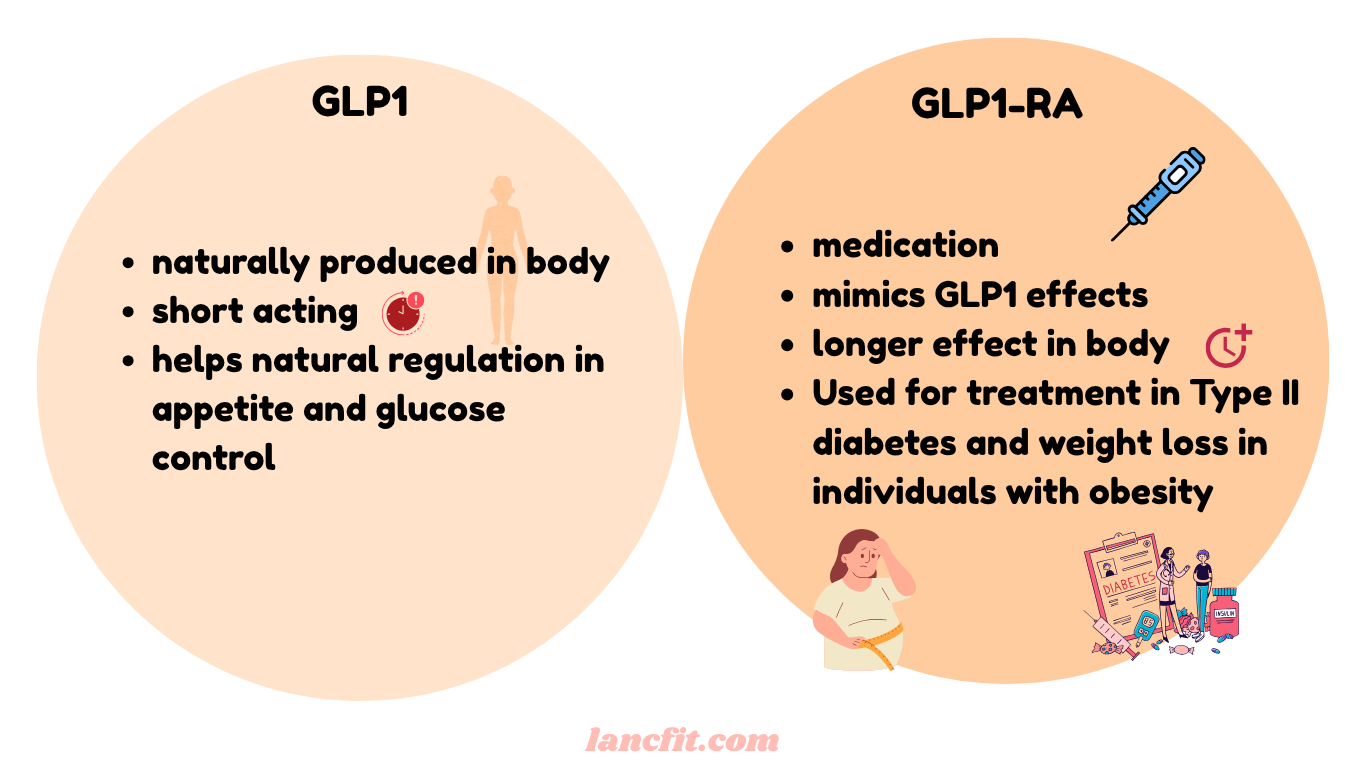
GLP-1, or glucagon-like peptide-1, is a naturally occurring hormone produced primarily by specialized cells in the intestine. It acts as a messenger in the body by binding to GLP-1 receptors (GLP-1Rs), which are expressed in multiple tissues, including the pancreas, brain, gastrointestinal tract, heart, and kidneys.
When GLP-1 binds to these receptors, it triggers a series of responses that help regulate blood sugar and appetite, among other functions (Cleveland Clinic, 2023).

What Are GLP-1 Receptor Agonists?
GLP-1 receptor agonists (GLP-1 RAs) are medications designed to mimic the effects of naturally occurring GLP-1. They activate the same GLP-1 receptors, producing similar effects while being designed to remain active in the body longer than naturally occurring GLP-1 (Latif et al., 2024).
By activating GLP-1 receptors, these medications can help regulate blood sugar, slow stomach emptying, and increase feelings of fullness.
Some commonly recognized GLP-1 receptor agonist medications include Ozempic (semaglutide), Wegovy (semaglutide), and Trulicity (dulaglutide).
Acronym Recap
GLP-1: Naturally occurring hormone that helps regulate blood sugar, appetite, and other functions.
GLP-1 RA: Medication designed to mimic or activate GLP-1 signaling.
GLP-1 Medications and Type 2 Diabetes
GLP-1 receptor agonists (GLP-1 RAs) were developed as medications for the treatment of type 2 diabetes. The development of these medications was based on the discovery of GLP-1’s role in regulating blood glucose by stimulating insulin secretion and suppressing glucagon secretion (Drucker et al., 2017).
For people with type 2 diabetes, medication selection is individualized with guidance from a medical professional. Metformin remains a commonly used medication and has historically been considered a first-line treatment when no other factors influence medication selection. However, current American Diabetes Association guidelines emphasize a person-centered approach rather than requiring metformin to be used before other medications. For example, a GLP-1 RA may be recommended for people with type 2 diabetes who have certain cardiovascular or kidney conditions, or when weight management is an important treatment goal (American Diabetes Association Professional Practice Committee, 2026).
Research has demonstrated that GLP-1 RAs can provide significant improvements in blood glucose control and body weight. Certain GLP-1 RAs have also demonstrated cardiovascular benefits in people with type 2 diabetes and cardiovascular disease or elevated cardiovascular risk (Latif et al., 2024; American Diabetes Association Professional Practice Committee, 2026).
Overall, GLP-1 RAs have become an important treatment option for type 2 diabetes because they can address several aspects of the condition at the same time, including blood glucose regulation, appetite, and body weight. Their effects extend beyond simply lowering blood sugar, making them an important part of modern diabetes treatment.
GLP-1 Medications in Weight Management
With so many weight-loss strategies available, why have GLP-1 receptor agonists (GLP-1 RAs) become such a widely discussed option?
Liraglutide, a GLP-1 receptor agonist, was approved in December 2014 for chronic weight management in adults with a BMI of 30 kg/m2 or higher or a BMI of 27 kg/m2 or higher who have at least one weight-related condition. (U.S. Food and Drug Administration [FDA], 2020). Since then, additional GLP-1-based medications have been approved for weight management, increasing the role of these medications in obesity treatment.
One reason GLP-1 medications have received so much attention is that weight management involves much more than willpower or simply choosing to eat less and exercise more. Obesity can cause long-term changes in the body's appetite and energy-regulation systems. Even after weight loss, physiological adaptations can increase hunger and promote weight regain, making long-term weight management challenging (Wang et al., 2023).
For example, leptin is a hormone produced primarily by fat tissue that helps communicate information about the body's energy stores to the brain. In obesity, prolonged exposure to elevated leptin levels can contribute to leptin resistance, in which the brain becomes less responsive to leptin's signals. This is one of several physiological changes that can influence appetite and energy regulation in people with obesity (Obesity Medicine Association, 2025).
Weight-loss surgery can produce substantial and sustained weight loss and improve many obesity-related health conditions. However, weight regain can still occur following surgery, further demonstrating that the body's biological regulation of appetite and body weight can make long-term weight management challenging (Wang et al., 2023).

So, how do GLP-1 medications help?
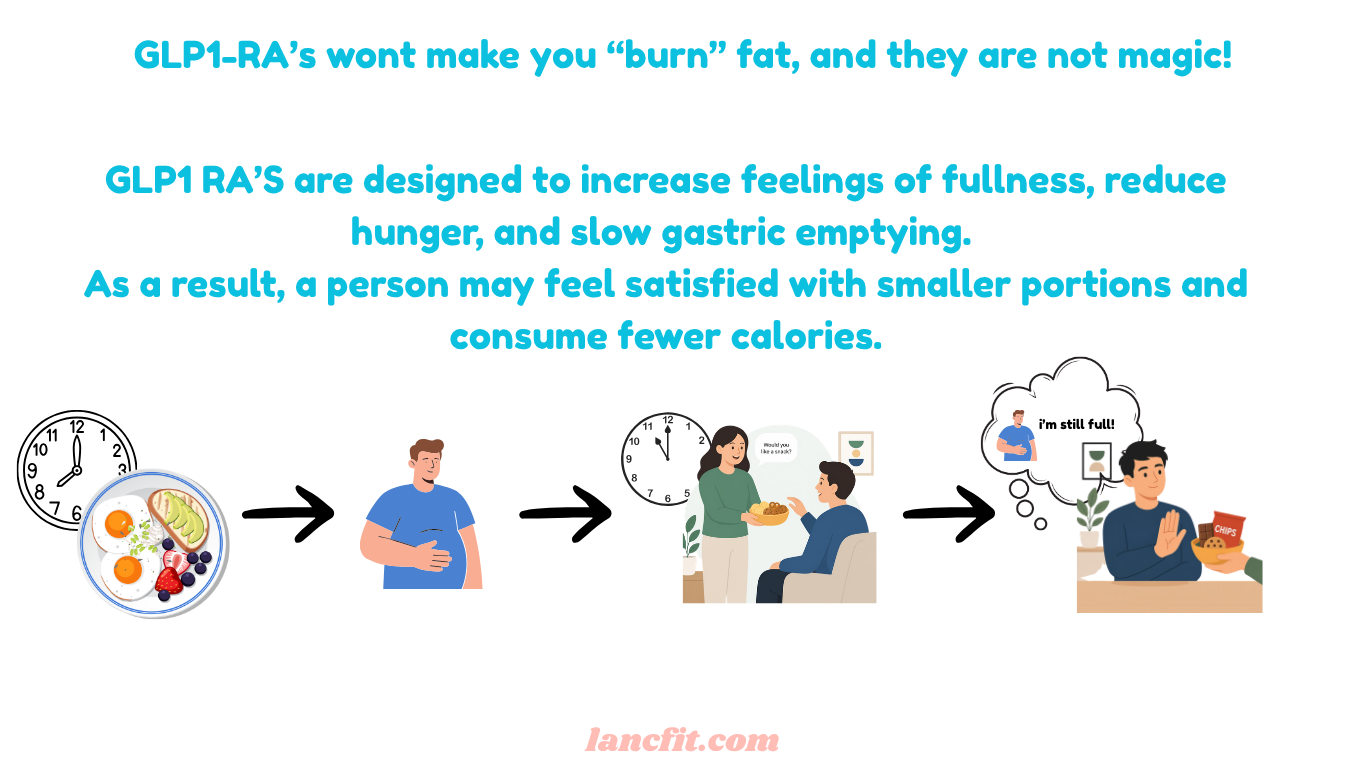
GLP-1 receptor agonists do not cause weight loss simply by “burning fat.” Instead, one of their primary effects is reducing energy intake. By activating GLP-1 receptors, these medications can increase feelings of fullness, reduce hunger, and slow gastric emptying. As a result, a person may feel satisfied with smaller portions and consume fewer calories.
Over time, reduced energy intake can create a calorie deficit, which can lead to weight loss.
Generally, weight reduction is more rapid during the first 6 months and slows thereafter, with relative plateauing at approximately 18 months (Mozaffarian et al., 2025).
This distinction is important: GLP-1 medications do not replace the body's need for energy balance. Rather, they can influence some of the physiological signals that regulate hunger, fullness, and food intake, making it easier for some individuals to maintain a lower energy intake (Wang et al., 2023).
Common Side Effects
Keep in mind that common side effects can vary depending on the specific GLP-1 receptor agonist (GLP-1 RA), dosage, and route of administration prescribed.
Side effects are relatively common and are more likely to occur during the first few weeks of treatment and following dose increases. For many people, side effects decrease in frequency and severity as the body adjusts to a stable dose (Mozaffarian et al., 2025).
Typical gastrointestinal side effects include nausea, vomiting, and diarrhea. Depending on the severity of these symptoms, patients may find it difficult to take their medication as prescribed (Al-Noshokaty et al., 2025).
If you experience bothersome or persistent side effects, it is important to speak with your healthcare provider before stopping the medication. Your provider may be able to adjust your dose, modify your treatment plan, or discuss other options with you.
GLP-1s and Nutrition
When using GLP-1 receptor agonists (GLP-1 RAs) for weight loss, caloric intake can decrease significantly, with one study reporting reductions of approximately 16%–39%. A rapid reduction in calorie intake can make it more difficult to consume adequate amounts of essential vitamins and minerals. If a person is also experiencing gastrointestinal side effects from the medication, such as nausea or vomiting, maintaining adequate food and fluid intake may become even more challenging. Prior to GLP-1 initiation, individuals should undergo appropriate medical and nutritional assessment and screening (Mozaffarian et al., 2025).
Adequate dietary protein should be a priority during weight loss to help preserve lean muscle mass and support bone health.
Some individuals may get caught in a cycle of not eating because of nausea. Going too long without eating may make nausea feel worse, which can further reduce the desire or ability to eat.
Some strategies that may help include:
Eating smaller, more frequent meals
Drinking adequate fluids throughout the day
Trying peppermint or ginger tea if tolerated
Choosing nutrient-dense foods when appetite is limited
Prioritizing protein-rich foods to help meet protein needs
A registered dietitian nutritionist can help you develop an eating plan that is tailored to your individual nutritional needs, preferences, and goals.



GLP-1s and Exercise
Adequate protein intake alone is unlikely to be sufficient to preserve muscle mass in the absence of structured resistance or strength training (Mehrtash et al., 2025).
Weight loss with GLP-1 RA use can result in reductions in both fat mass and lean mass. Incorporating regular physical activity, particularly resistance training, can help preserve muscle mass during weight loss. GLP-1 RAs are typically recommended as part of a comprehensive approach that includes healthy eating and physical activity (Mozaffarian et al., 2025).
Aim for regular strength training at least 2–3 times per week, along with at least 150 minutes of moderate-intensity aerobic activity per week, as appropriate for your individual fitness level and physical capacity. Exercise programs should be customized to the individual to promote safety, adherence, and effectiveness (Mozaffarian et al., 2025; Mehrtash et al., 2025).
A personal trainer can be a helpful resource for developing a personalized exercise program and providing guidance on proper exercise technique and progression.

What Happens When You Stop Taking GLP-1s?
Weight regain after stopping a GLP-1 RA varies from person to person, but regaining some of the weight lost is common. Research suggests that some of the physiological changes that promote weight regain can persist after medication is discontinued.
Building sustainable nutrition and exercise habits while taking a GLP-1 RA may help support long-term weight management after discontinuation. Continuing regular physical activity, resistance training, and healthy eating habits can help support the maintenance of muscle mass and overall health (Mehrtash et al., 2025; Elias, 2026).
Developing these habits early in treatment can help establish a foundation for long-term weight management that extends beyond the period of medication use.
Concerns & Controversies
Potential for Long-Term or Lifelong Use
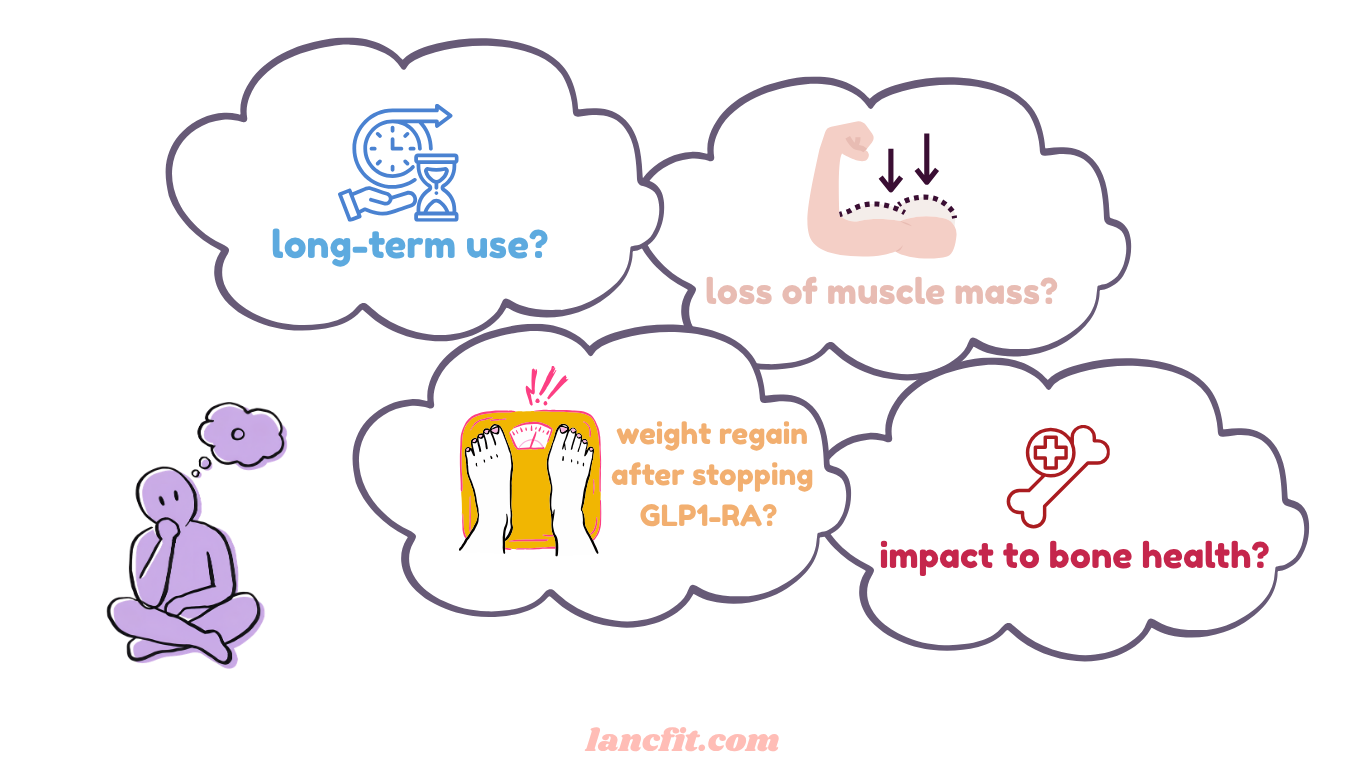
As discussed in the previous section, weight regain after stopping GLP-1 receptor agonists (GLP-1 RAs) is common, although the amount of weight regained varies from person to person. Maintaining healthy nutrition and exercise habits may help support long-term weight management, but these strategies do not completely prevent weight regain for everyone.
Because obesity is a chronic condition and weight regain can occur after treatment is discontinued, some individuals may require long-term or ongoing medication treatment to help maintain weight loss. The appropriate duration of treatment should be determined with a healthcare professional based on the individual’s health, treatment goals, and response to therapy (Brennan, 2025).
Long-Term Side Effects and Areas of Concern
As the use of GLP-1 medications continues to increase, researchers are continuing to study their long-term effects. Some potential concerns include:
Loss of muscle mass: Weight loss can include reductions in both fat mass and lean mass. Researchers continue to study whether the lean mass lost during treatment is fully regained if weight is regained after discontinuing medication.
Bone health: Sustained or substantial weight loss can be associated with changes in bone mineral density. Researchers are continuing to investigate whether these changes may affect long-term fracture risk.
Rare but serious risks: GLP-1 RAs have been associated with serious adverse effects, including pancreatitis and gallbladder-related conditions. Acute kidney injury has also been reported, particularly in the context of severe gastrointestinal symptoms and dehydration. Thyroid C-cell tumors have been observed in animal studies; however, it is not known whether GLP-1 RAs cause these tumors in humans.
Long-term effects still being studied: Because many GLP-1 medications have not been used by large populations for several decades, researchers continue to monitor for potential long-term effects and safety concerns. Ongoing research is evaluating possible effects across different organ systems, including potential ocular and neurological effects.
Counterfeit and Unapproved GLP-1 Medications
The FDA is aware of counterfeit Ozempic being marketed in the United States. Counterfeit medications may contain the wrong ingredients, too little or too much active ingredient, no active ingredient, or other potentially harmful ingredients.
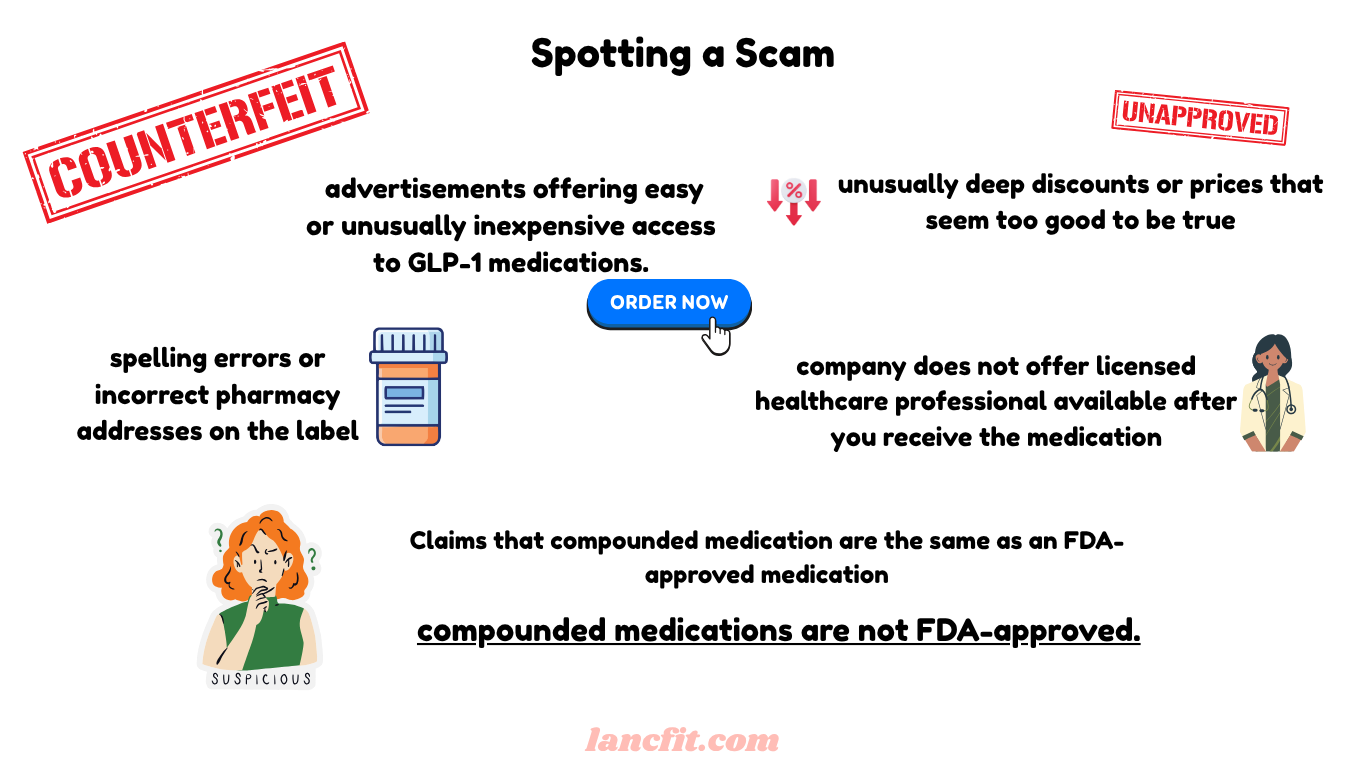
Consumers should also be cautious of online advertisements offering easy or unusually inexpensive access to GLP-1 medications. The FDA recommends obtaining prescription medications through a state-licensed pharmacy and being cautious when purchasing medications online.
The FDA recommends watching for warning signs when obtaining compounded GLP-1 medications through telehealth. These include companies that:
Claim a compounded medication is the same as an FDA-approved medication
Offer medications at unusually deep discounts or prices that seem too good to be true
Send medication that looks different from what you previously received or arrives in damaged packaging
Do not require screening and a prescription from a licensed healthcare provider
Do not have a licensed healthcare professional available to answer questions after you receive the medication
Have spelling errors or incorrect pharmacy addresses on the label
List a pharmacy name that may be fraudulent
It is important to understand that compounded medications are not FDA-approved. The FDA does not review compounded drugs for safety, effectiveness, or quality before they are marketed. Compounded medications may be appropriate in certain circumstances when a patient’s medical needs cannot be met by an FDA-approved medication, but they should be obtained through appropriate medical and pharmacy channels.
Wrapping It Up
GLP-1 medications have quickly become one of the most discussed tools for managing type 2 diabetes and obesity. While these medications can provide significant benefits, they are not a quick fix or a replacement for healthy nutrition, physical activity, or long-term lifestyle habits.
GLP-1 receptor agonists work by influencing some of the body’s natural signals involved in blood sugar regulation, hunger, fullness, and food intake. For some individuals, this can make it easier to reduce calorie intake and achieve meaningful weight loss. However, weight loss can also involve the loss of lean mass, making adequate nutrition and regular resistance training important parts of a comprehensive approach.
It is also important to understand that GLP-1 medications are not appropriate for everyone, and side effects, potential risks, cost, and the possibility of weight regain after discontinuation should all be considered. Because research into these medications continues to evolve, decisions about starting, adjusting, or stopping treatment should be made with a qualified healthcare professional.
Ultimately, GLP-1 medications can be a valuable tool when appropriately prescribed and monitored. The goal should not simply be to lose weight while taking a medication, but to support overall health and develop sustainable nutrition, physical activity, and lifestyle habits that can continue throughout and beyond treatment.
ABOUT THE AUTHOR
Hayley Kauffman, LPN is a Licensed Practical Nurse and NASM Certified Personal Trainer and Nutrition Coach with a passion for helping people improve their health through evidence-based fitness, nutrition, and sustainable lifestyle habits. She believes lasting results come from building realistic routines that fit each person's unique goals and lifestyle.
EDUCATIONAL DISCLAIMER
The information provided in this article is for educational and informational purposes only and is not intended as medical advice. It should not be used to diagnose, treat, cure, or prevent any disease or medical condition. Always consult your physician or another qualified healthcare provider before beginning any new exercise, nutrition, or wellness program, especially if you have any underlying health conditions or concerns.
References
Al-Noshokaty, T. M., Abdelhamid, R., Abdelmaksoud, N. M., Khaled, A., Hossam, M., Ahmed, R., Saber, T., Khaled, S., Elshaer, S. S., & Abulsoud, A. I. (2025). Unlocking the multifaceted roles of GLP-1: Physiological functions and therapeutic potential. Toxicology Reports, 14, 101895. https://doi.org/10.1016/j.toxrep.2025.101895
American Diabetes Association Professional Practice Committee for Diabetes. (2026). 9. Pharmacologic approaches to glycemic treatment: Standards of care in diabetes—2026. Diabetes Care, 49(Supplement 1), S183–S215. https://doi.org/10.2337/dc26-S009
Brennan, D. (2025, August 14). Pros and cons of GLP-1 agonists for weight loss. Mayo Clinic. https://communityhealth.mayoclinic.org/featured-stories/weight-loss-drugs
Cleveland Clinic. (2023, July 3). GLP-1 agonists: What they are, how they work & side effects. https://my.clevelandclinic.org/health/treatments/13901-glp-1-agonists
Drucker, D. J., Habener, J. F., & Holst, J. J. (2017). Discovery, characterization, and clinical development of the glucagon-like peptides. The Journal of Clinical Investigation, 127(12), 4217–4227. https://doi.org/10.1172/JCI97233
Elias, N. (2026, August 6). What happens when you stop taking a GLP-1? University of Rochester Medical Center. https://www.urmc.rochester.edu/news/publications/health-matters/what-happens-when-you-stop-taking-a-glp-1
Latif, W., Lambrinos, K. J., Patel, P., & Rodriguez, R. (2024). Compare and contrast the glucagon-like peptide-1 receptor agonists (GLP1RAs). In StatPearls. StatPearls Publishing. https://www.ncbi.nlm.nih.gov/books/NBK572151/
Mehrtash, F., Dushay, J., & Manson, J. E. (2025). I am taking a GLP-1 weight-loss medication—What should I know? JAMA Internal Medicine, 185(9), 1180. https://doi.org/10.1001/jamainternmed.2025.1133
Mozaffarian, D., Agarwal, M., Aggarwal, M., Alexander, L., Apovian, C. M., Bindlish, S., Bonnet, J., Butsch, W. S., Christensen, S., Gianos, E., Gulati, M., Gupta, A., Horn, D., Kane, R. M., Saluja, J., Sannidhi, D., Stanford, F. C., & Callahan, E. A. (2025). Nutritional priorities to support GLP-1 therapy for obesity: A joint advisory from the American College of Lifestyle Medicine, the American Society for Nutrition, the Obesity Medicine Association, and The Obesity Society. The American Journal of Clinical Nutrition, 122(1), 344–367. https://doi.org/10.1016/j.ajcnut.2025.04.023
Obesity Medicine Association. (2025, May 6). Understanding leptin resistance: Symptoms & treatment options. https://obesitymedicine.org/blog/understanding-leptin-resistance-symptoms-treatment-options/
U.S. Food and Drug Administration. (2020, December 4). FDA approves weight management drug for patients aged 12 and older. https://www.fda.gov/drugs/news-events-human-drugs/fda-approves-weight-management-drug-patients-aged-12-and-older
U.S. Food and Drug Administration. (2025, December 5). FDA warns consumers not to use counterfeit Ozempic (semaglutide) found in U.S. drug supply chain. https://www.fda.gov/drugs/drug-alerts-and-statements/fda-warns-consumers-not-use-counterfeit-ozempic-semaglutide-found-us-drug-supply-chain
U.S. Food and Drug Administration. (2026, February 4). FDA’s concerns with unapproved GLP-1 drugs used for weight loss. https://www.fda.gov/drugs/drug-alerts-and-statements/fdas-concerns-unapproved-glp-1-drugs-used-weight-loss
Wang, J.-Y., Wang, Q.-W., Yang, X.-Y., Yang, W., Li, D.-R., Jin, J.-Y., Zhang, H.-C., & Zhang, X.-F. (2023). GLP-1 receptor agonists for the treatment of obesity: Role as a promising approach. Frontiers in Endocrinology, 14, 1085799. https://doi.org/10.3389/fendo.2023.1085799
