Increasing Your Total Calories Burned Each Day
There is no single best strategy for weight management. Some evidence-based methods suggest that reducing daily calorie intake is one of the most important factors for weight loss (Kim, 2021). However, decades of research have shown that calorie-restricted diets rarely result in permanent weight loss (Gordon et al., 2019).
When looking to lose weight and maintain a healthy weight, it is helpful to focus on sustainable lifestyle changes. Small habits, practiced consistently, can add up to make a big difference over time.
First, let's go over the main ways our bodies use energy.
Heads up, A LOT of acronyms:

Total Daily Energy Expenditure (TDEE) is the total number of calories your body burns in a 24-hour period. This includes your RMR, TEA (EAT & NEAT), and TEF.
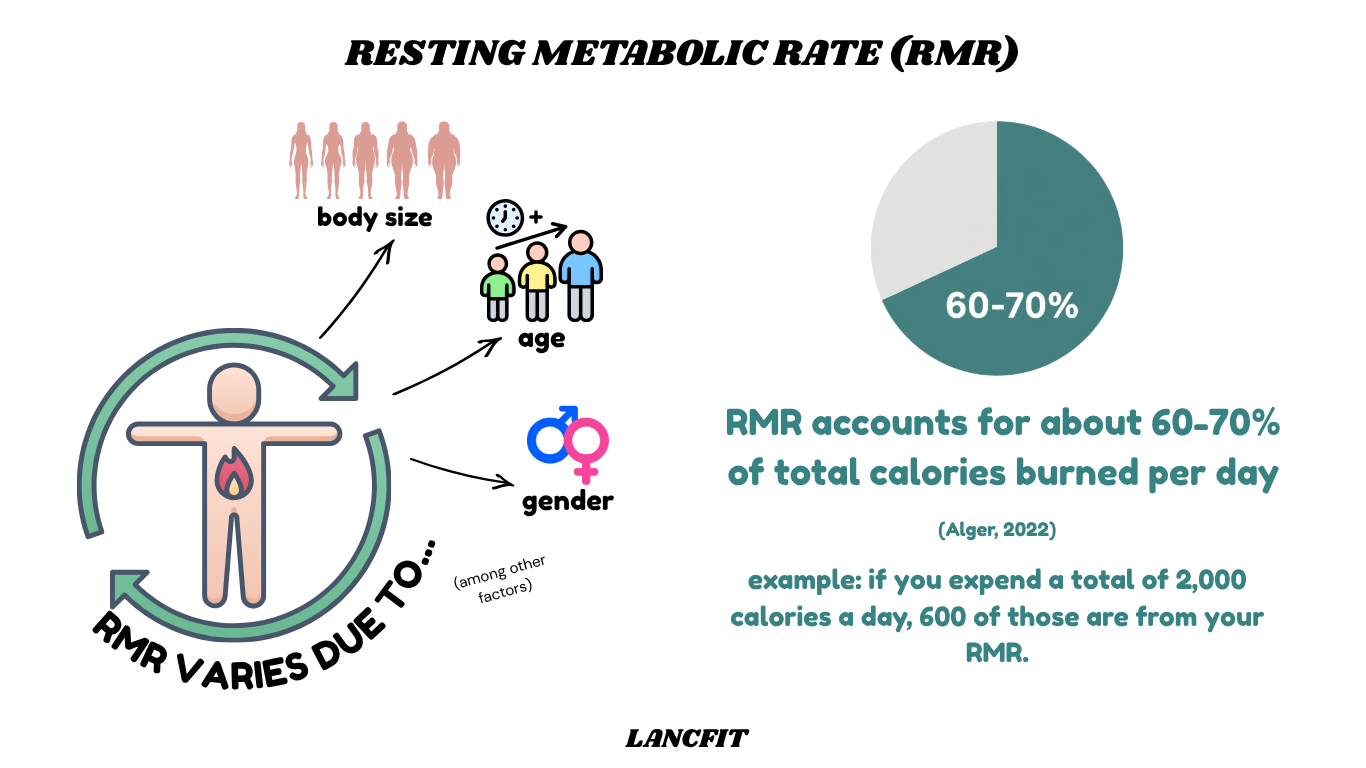
Resting Metabolic Rate (RMR) is the baseline amount of energy your body uses for essential functions such as breathing, organ function, and cellular repair throughout the day.
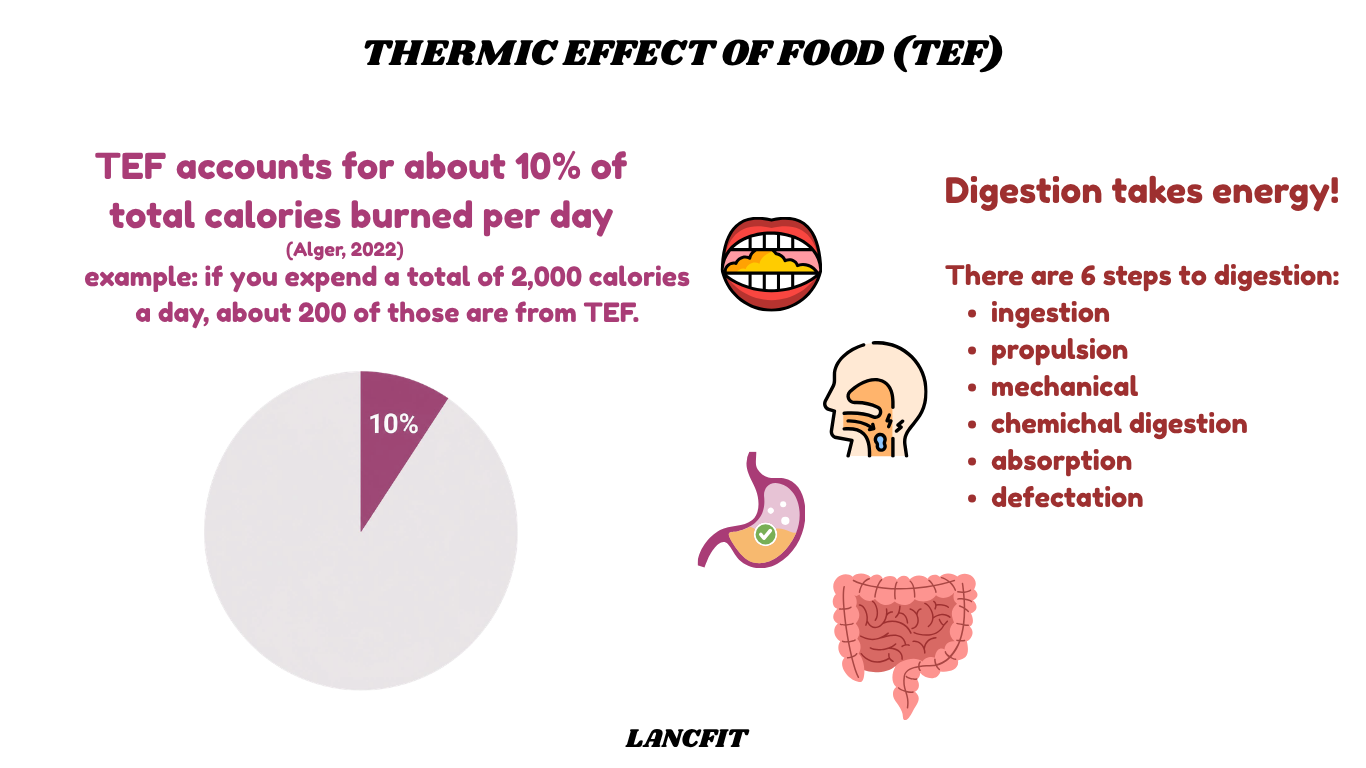
Thermic Effect of Food (TEF) is the energy your body expends to digest, absorb, and metabolize the food you eat.

Thermic Effect of Activity (TEA)is the amount of energy expended through physical movement, including structured exercise (EAT) and everyday movement (NEAT).
The main difference between Exercise Activity Thermogenesis (EAT) and Non-Exercise Activity Thermogenesis (NEAT) is that EAT is planned exercise, while NEAT includes all of the movement you do outside of intentional workouts.
Exercise Activity Thermogenesis (EAT) refers to the energy expended during formal exercise, such as running, strength training, or a HIIT class.
Non-Exercise Activity Thermogenesis (NEAT) is the energy expended during all activities that are not sleeping, eating, or structured exercise. It includes the movement you do throughout the day that doesn't involve going to the gym or following a workout.
Why Is TDEE Important?
Whether your goal is to lose weight, maintain your current weight, or gain muscle, your Total Daily Energy Expenditure (TDEE) can be used as a baseline for determining the calorie deficit, maintenance calories, or calorie surplus needed to support your goals.
Even if you don't have a specific weight goal, knowing your TDEE can provide insight into how much you are moving throughout the day. Since physical activity plays an important role in overall health, TDEE can be a helpful way to monitor changes in your daily energy expenditure over time.
You can estimate your TDEE using online calculators, such as TDEE Calculator (https://tdeecalculator.net/).
Wearable health trackers, such as a smartwatch or Oura Ring, can also provide an estimate of your daily calorie expenditure.
TRY IT: If you have a fitness tracker, note your average TDEE (total calories burned per day) before you begin implementing the habits in this guide. After one month, compare your new average TDEE with your baseline. You may be surprised by how much those small daily habits can add up!
Increasing Your Resting Metabolic Rate
Even when you're sleeping, watching a movie, or sitting at your desk, your body is constantly using energy to power the internal processes that keep you alive.
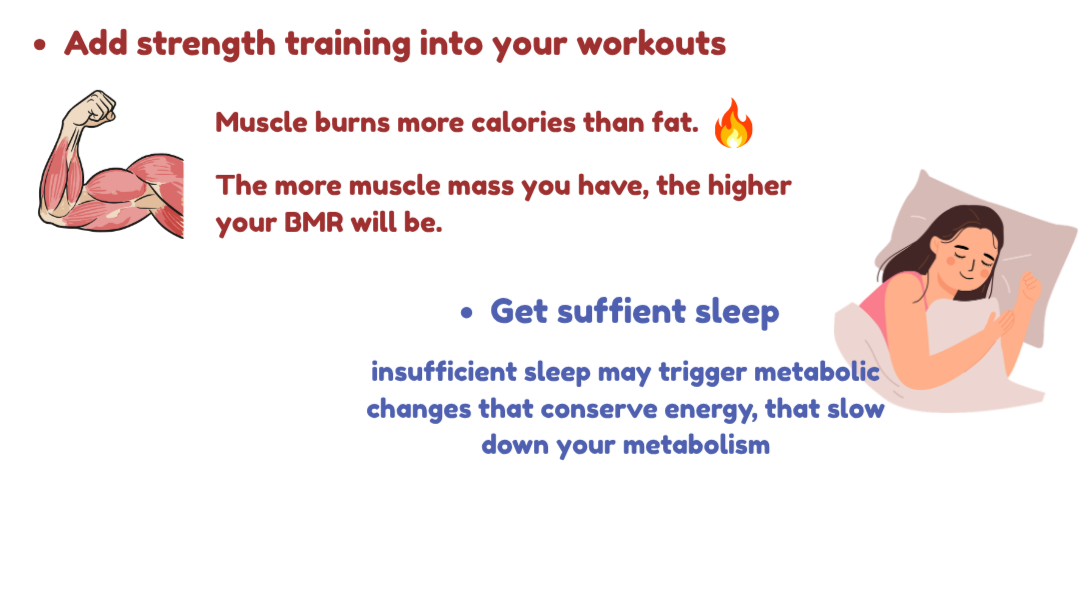
One of the most effective ways to increase your Resting Metabolic Rate (RMR) is by building muscle.
Muscle burns more calories than fat, even while at rest. This means that the more muscle mass you have, the higher your RMR is likely to be (Restivo, 2024).
Getting a good night's sleep can also help support a healthy resting metabolic rate. A 2015 study found that sleep restriction decreased morning resting metabolic rate in healthy adults, suggesting that insufficient sleep may trigger metabolic changes that conserve energy (Spaeth et al., 2015).
Increasing Your THERMIC EFFECT OF FOOD
When we consume food, our bodies use energy to chew, swallow, digest, absorb, and process the nutrients from our meals. Certain foods require more energy to process than others. While the Thermic Effect of Food (TEF) only accounts for about 10% of your Total Daily Energy Expenditure (TDEE), it is still worth considering when making small lifestyle changes that can lead to meaningful results.
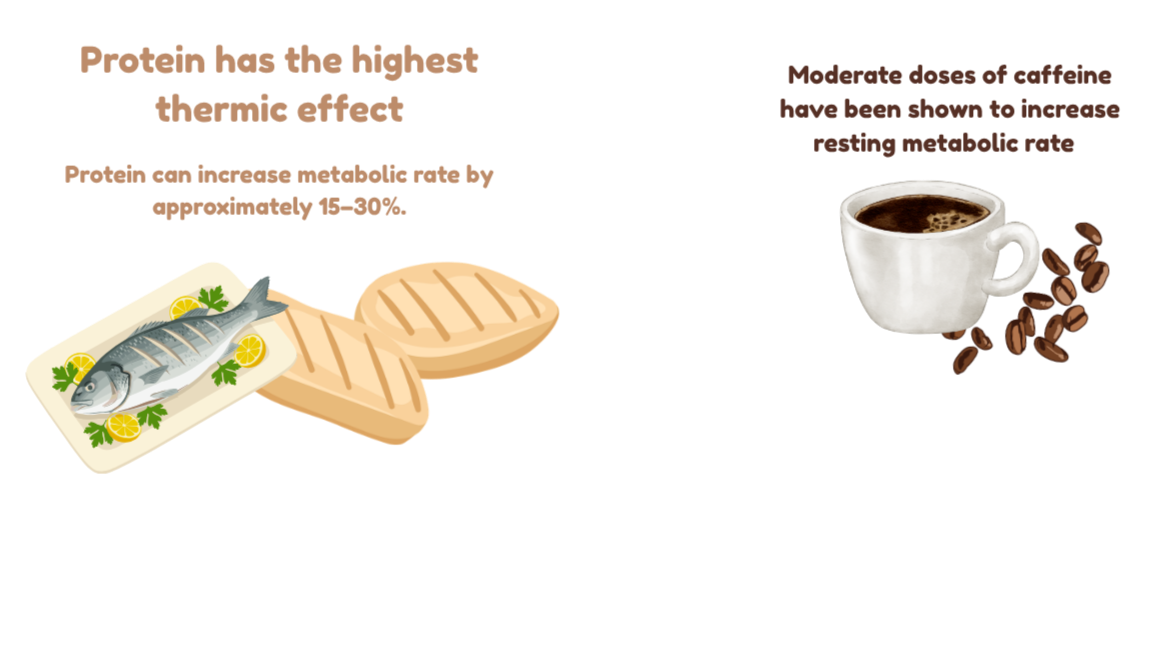
Protein has the highest thermic effect and can increase metabolic rate by approximately 15–30%.
Carbohydrates increase metabolic rate by about 5–10%, while fats increase it by approximately 3% (Ensle, 2020).
It is also important to consider the types of carbohydrates you are consuming, such as simple versus complex carbohydrates. See my post about whole foods for more insight into choosing minimally processed, nutrient-dense options.
Caffeine may also have an impact on energy expenditure. Moderate doses of caffeine (approximately 4 milligrams per kilogram of body weight) have been shown to increase resting metabolic rate (RMR) by 4.9–12% in both normal-weight and individuals with obesity, with a greater increase observed among normal-weight individuals (Acheson et al., 1980).
Increasing Your Thermic Effect of Activity
EAT and NEAT both vary greatly from person to person when it comes to percentage of daily energy.
For Exercise Activity Thermogenesis (EAT), Sedentary persons can be as low as 1-2%, whereas habitual exercisers can be as high as 30%.
In Non-Exercise Activity Thermogenesis (NEAT), it is responsible for 6-10% of TDEE in individuals with a mainly sedentary lifestyle and 50% or more in highly active subjects. (Thiyagarajan et al., 2024)
Increasing Exercise Activity Thermogenesis
Exercise Activity Thermogenesis (EAT) refers to planned physical activity, such as strength training, running, cycling, or fitness classes.
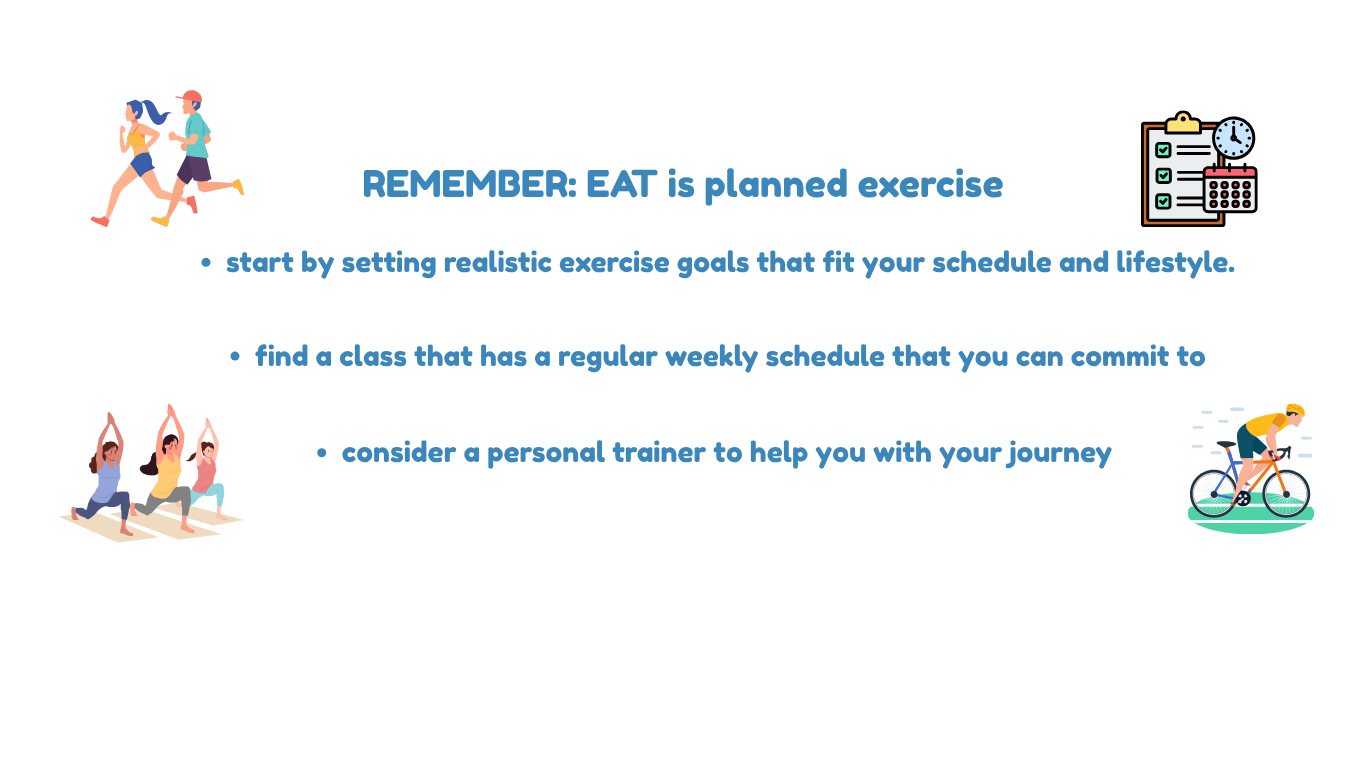
To increase your EAT, start by setting realistic exercise goals that fit your schedule and lifestyle.
The most important factor is creating a routine that you can consistently follow.
Increasing Non-Exercise Activity Thermogenesis
Non-Exercise Activity Thermogenesis (NEAT) includes all of the movement you do throughout the day that is not eating, sleeping, or structured exercise.
Park farther away.
Choose a parking spot farther from the entrance at the store or workplace. It may not seem impactful once, but consistently adding those extra steps can add up over time.Take the stairs.
Skip the escalator or elevator when possible. If you have the option to use the stairs, take advantage of it!Walk and talk.
Have a work call or a friend checking in? If possible, get up and move while you talk.Add movement to your workday.
If you have a desk job, you may benefit from using a standing desk, walking pad, or under-desk pedaler to reduce prolonged sitting.Create a step goal.
Having a specific number to work toward can provide motivation and increase awareness of your daily movement.Take movement breaks.
Try to get up and move every 30–40 minutes. This could be doing 10 squats while working from home, walking to the breakroom to refill your water, or taking a short movement break. Start adding more intentional movement throughout your day.
This is arguably one of the most important areas we can control when making lifestyle changes because small increases in daily movement can add up over time.

Putting It All Together
Increasing your total daily calorie burn is not about finding one magic exercise, food, or strategy. Your Total Daily Energy Expenditure (TDEE) is made up of several components, including your resting metabolic rate (RMR), the thermic effect of food (TEF), and activity-related energy expenditure (TEA).
While some factors, such as genetics and age, are outside of our control, there are many small habits we can influence. Building muscle through strength training, prioritizing quality sleep, choosing protein-rich foods, and increasing daily movement can all contribute to a higher energy expenditure over time.
Remember, small changes repeated consistently can create meaningful results. You do not need to completely change your routine overnight. Start by choosing one or two habits that fit your lifestyle, build consistency, and gradually add more movement as you progress.
The goal is not just to burn more calories; it is to create a healthier, more active lifestyle that you can maintain for the long term.
About the Author
Hayley Kauffman, LPN is a Licensed Practical Nurse and NASM Certified Personal Trainer and Nutrition Coach with a passion for helping people improve their health through evidence-based fitness, nutrition, and sustainable lifestyle habits. She believes lasting results come from building realistic routines that fit each person's unique goals and lifestyle.
Educational Disclaimer
The information provided in this article is for educational and informational purposes only and is not intended as medical advice. It should not be used to diagnose, treat, cure, or prevent any disease or medical condition. Always consult your physician or another qualified healthcare provider before beginning any new exercise, nutrition, or wellness program, especially if you have any underlying health conditions or concerns.
references
Acheson, K. J., Zahorska-Markiewicz, B., Pittet, P., Anantharaman, K., & Jéquier, E. (1980). Caffeine and coffee: Their influence on metabolic rate and substrate utilization in normal weight and obese individuals. The American Journal of Clinical Nutrition, 33(5), 989–997. https://doi.org/10.1093/ajcn/33.5.989
Alger, A. H. (2022). 3.3 Estimating energy expenditure. In Nutrition and physical fitness. California State University, Chico. https://pressbooks.calstate.edu/nutritionandfitness/chapter/estimating-energy-expenditure/
Dulloo, A. G., Geissler, C. A., Horton, T., Collins, A., & Miller, D. S. (1989). Normal caffeine consumption: Influence on thermogenesis and daily energy expenditure in lean and postobese human volunteers. The American Journal of Clinical Nutrition, 49(1), 44–50. https://doi.org/10.1093/ajcn/49.1.44
Ensle, K. (2020, July). Are you choosing foods that burn the most calories? Rutgers New Jersey Agricultural Experiment Station, Rutgers Cooperative Extension. https://njaes.rutgers.edu/sshw/message/message.php?p=Health&m=1547
Gordon, J. L., Girdler, S. S., & Meltzer-Brody, S. E. (2019). Sticking to the facts: A systematic review of the relationship between estrogen and depression in perimenopausal and postmenopausal women. Climacteric, 22(4), 354–360. https://doi.org/10.1080/13697137.2019.1568404
Kim, J. Y. (2021). Optimal diet strategies for weight loss and weight loss maintenance. Journal of Obesity & Metabolic Syndrome, 30(1), 20–31. https://doi.org/10.7570/jomes20065
Restivo, J. (2024, July 1). Can you increase your metabolism? Harvard Health Publishing. https://www.health.harvard.edu/diet-and-nutrition/can-you-increase-your-metabolism
Spaeth, A. M., Dinges, D. F., & Goel, N. (2015). Resting metabolic rate varies by race and by sleep duration. Obesity, 23(12), 2349–2356. https://doi.org/10.1002/oby.21198
Thiyagarajan, D. K., Basit, H., & Jeanmonod, R. (2024). Physiology, menstrual cycle. In StatPearls. StatPearls Publishing. https://www.ncbi.nlm.nih.gov/books/NBK500020/
