Back to Basics: Building a Healthy Diet with Whole Foods
A guide to understanding whole foods, their benefits, and how to build a balanced eating pattern with less processed, nutrient-rich choices.
What Are Whole Foods?
In short, whole foods are foods that have not been processed or altered in a significant way. This means that the food product is at or very close to its natural state.
There are no current parameters of what exactly constitutes a whole foods diet, but there are diet plans that have been built on the idea of unprocessed foods such as the Whole Foods Plant-Based Diet and Whole360.
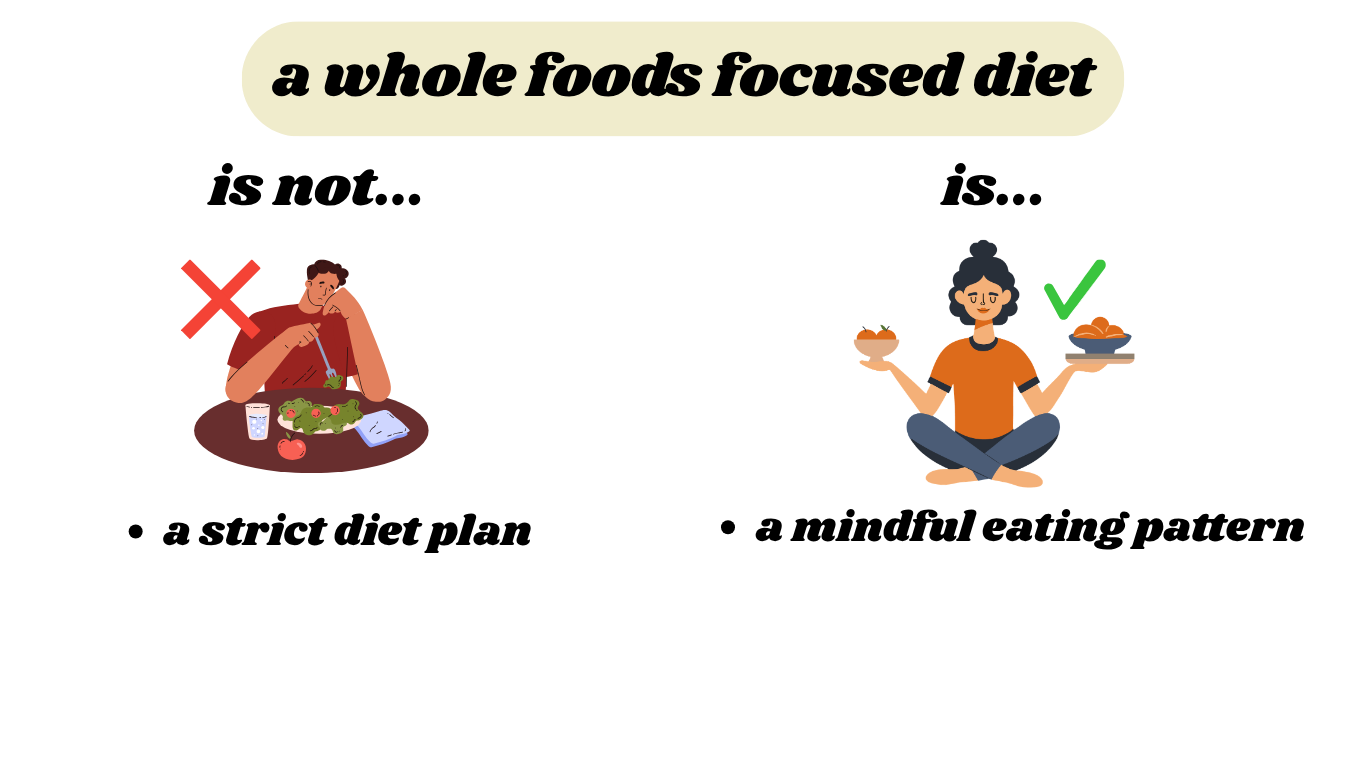
A whole foods diet should not be looked at as a strict diet plan, but an eating pattern and lifestyle focused on unprocessed or minimally processed foods. The idea of a whole foods diet is not to be restrictive, but a conscious choice of what foods are best for our bodies.
Minimally Processed vs. Ultra-Processed Foods
Not all food processing is harmful.
Minimally processed foods have been altered just enough to make them safer, easier to store, prepare, or eat without significantly changing their nutritional value. Common processing methods include washing, trimming inedible parts, grinding, refrigeration, pasteurization, fermentation, freezing, and vacuum packaging (Harvard T.H. Chan School of Public Health, n.d.).
These processes help improve food safety, extend shelf life, and increase convenience while preserving most of the food's original nutrients.
What Foods Are Whole Foods?
Most whole foods can be found in the produce section of the grocery store. A helpful guideline is to shop primarily around the perimeter of the store, where you'll typically find fresh fruits, vegetables, meats, seafood, dairy, and eggs. (Woods, 2025)
While the center aisles often contain more packaged and ultra-processed foods, you can find other whole foods such as beans, oats, brown rice, nuts, seeds, and frozen vegetables, so don't overlook them!
Shopping at local farmers’ markets is another great way to get fresh whole foods while supporting local farmers.
Fruits & Vegetables
Fresh fruits and vegetables in their natural form are some of the best examples of whole foods. Think about walking through the produce section of your local grocery store. Most fruits and vegetables are displayed in their original state, allowing you to choose, portion, and prepare them yourself.
Choosing minimally processed produce allows you to benefit from the full nutritional value of the food. Keeping edible skins and peels can provide additional fiber, vitamins, and minerals that may be lost during processing or peeling.
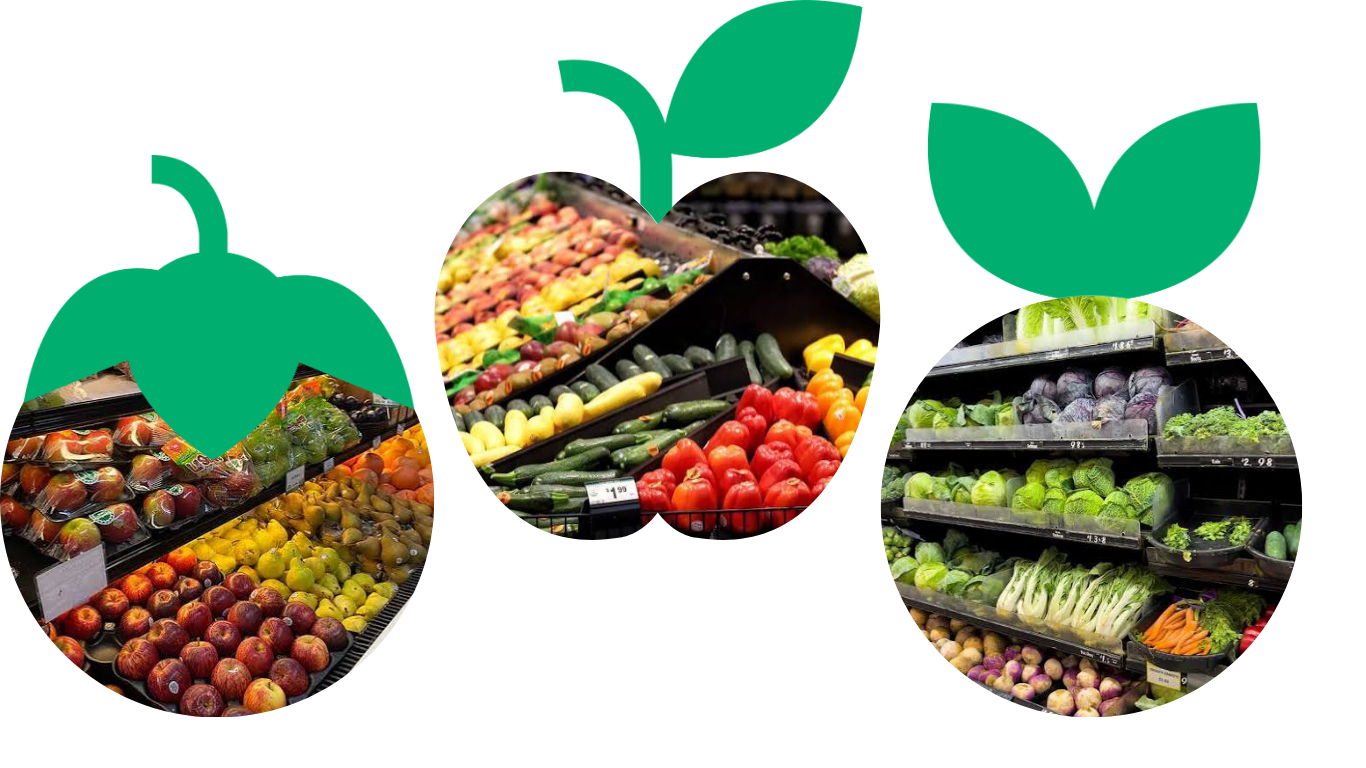
Frozen fruits and vegetables are also great choices, as they are often frozen shortly after harvest to preserve their nutrients. (American Diabetes Association, 2025)
Canned fruits and vegetables can be great options when needing to store for longer, but it's important to read the ingredient label. Choose products with few or no added ingredients whenever possible.
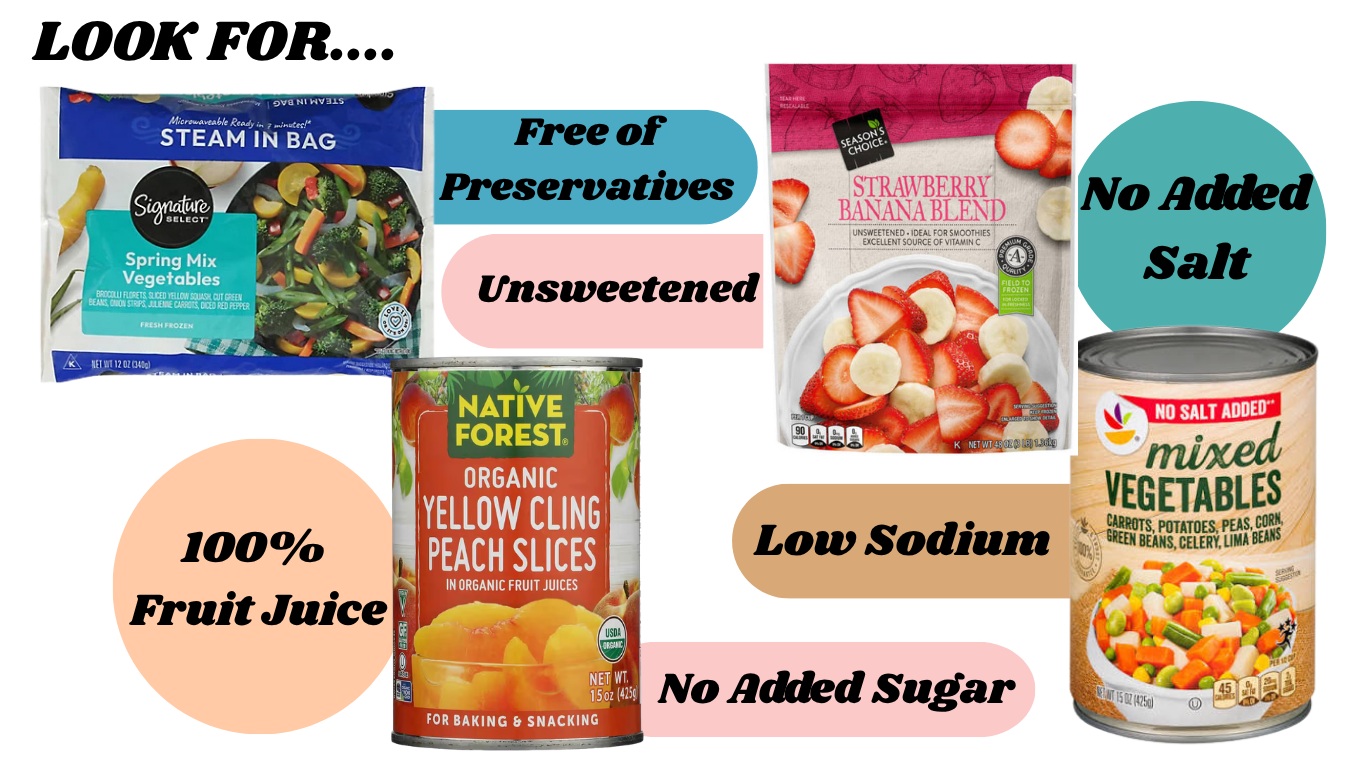
Select vegetables and beans labeled "no salt added" or those containing 5% Daily Value (DV) of sodium or less per serving.
Rinse canned vegetables and beans under running water to remove some of the added sodium.
Choose canned fruit packed in 100% fruit juice or water instead of syrup, and avoid products with added sugars.
Grains
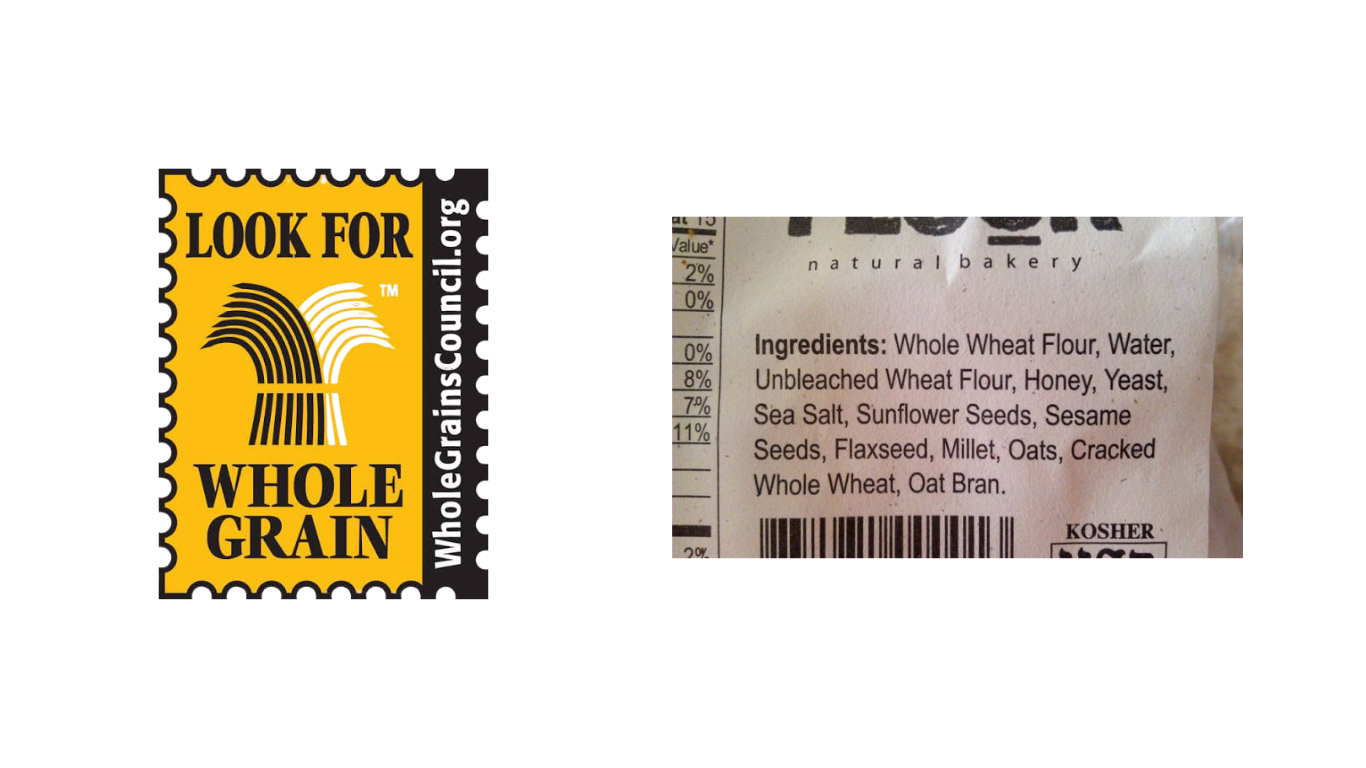
Whole grains contain all three parts of the grain (the bran, germ, and endosperm). Together, these provide important nutrients, including fiber, B vitamins, iron, and more.
Refined grains have the bran and germ removed during processing, leaving primarily the starchy endosperm. This process also removes much of the fiber, vitamins, and minerals.
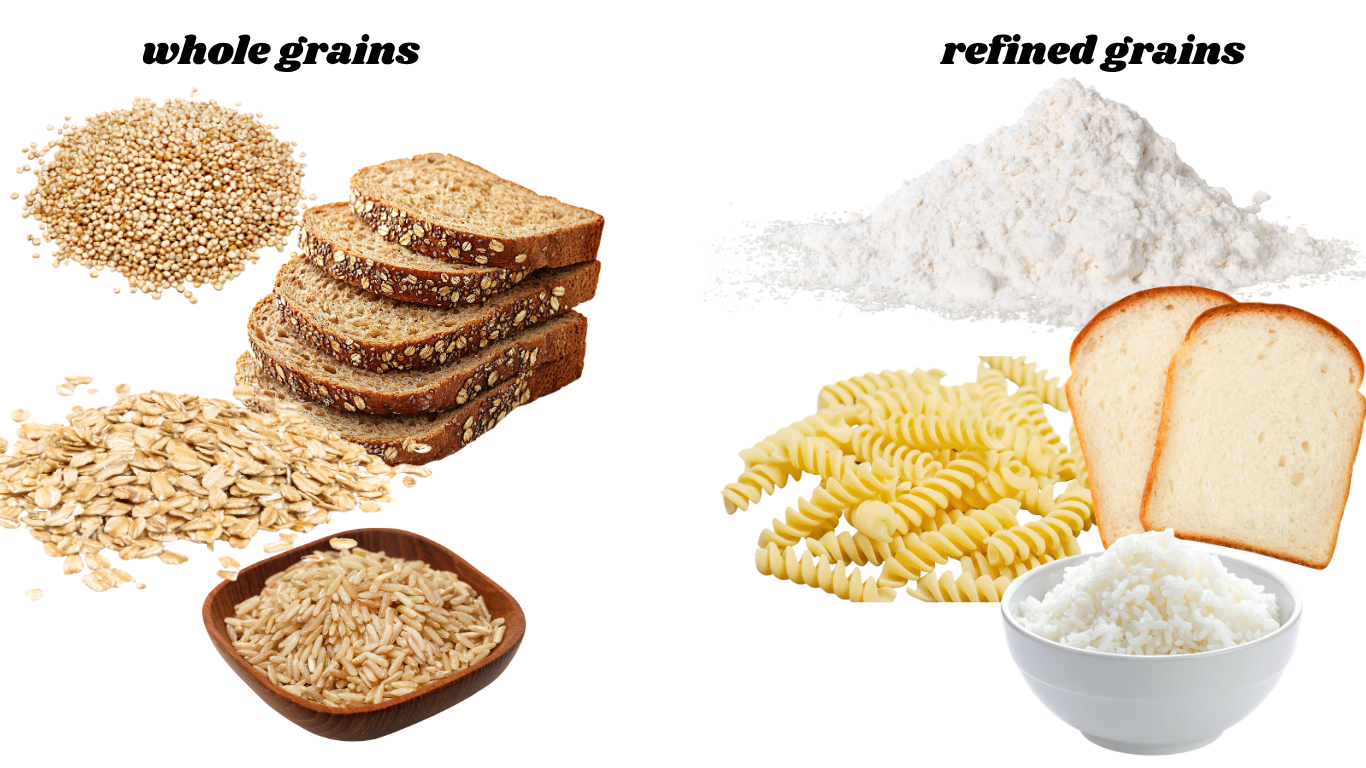
Examples of whole grains: Quinoa, rolled oats, whole wheat, brown rice
Examples of refined grains: White rice, white bread, white pasta, white flour
Tip: Look for "100% whole grain" or "100% whole wheat" on the front of the package. Check the ingredient list and choose products that list a whole grain (such as whole wheat or whole oats) as the first ingredient.
Legumes
Legumes include beans, lentils, peas, and chickpeas. They are an excellent source of fiber, protein, vitamins, minerals, and complex carbohydrates.
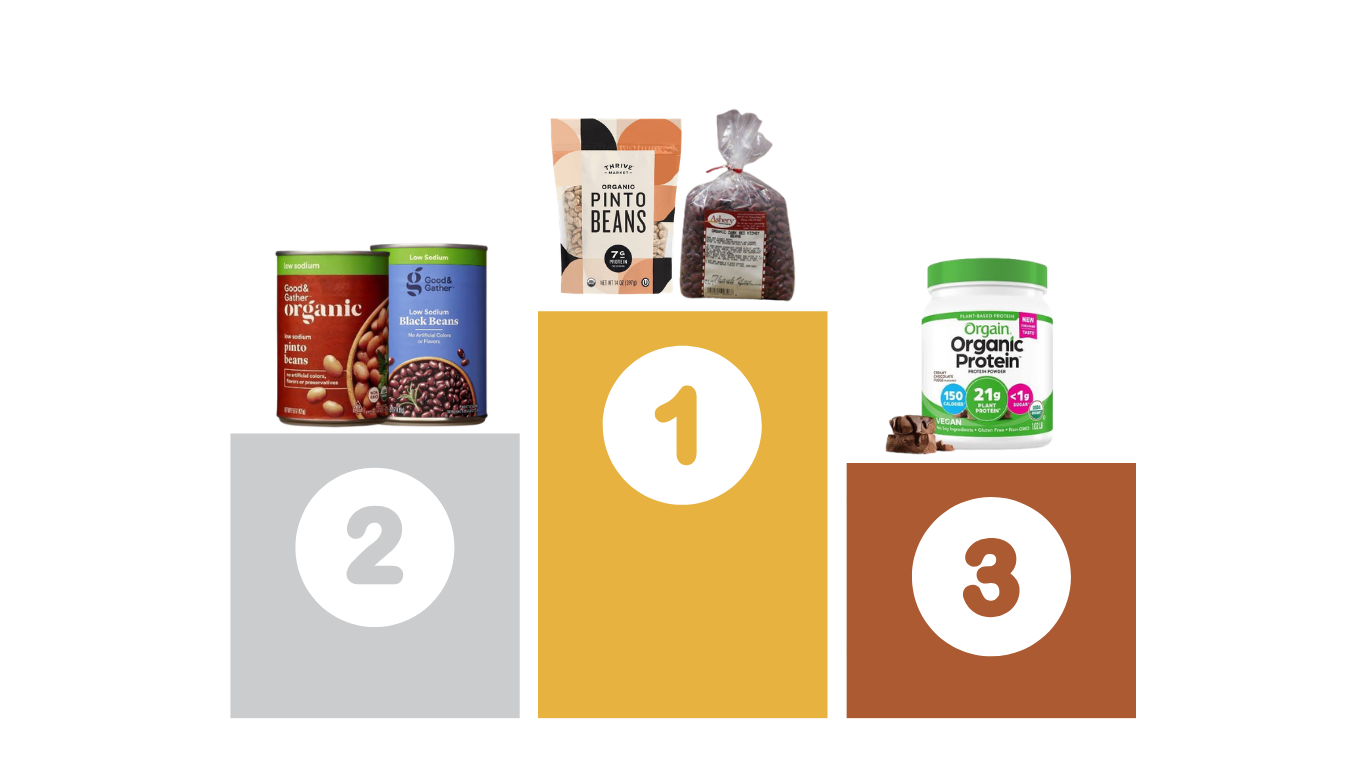
Whole legumes such as dried beans, lentils, and peas that are cooked at home, are the closest to their natural state and are an excellent choice for a whole-food eating pattern.
Minimally processed legumes, including canned or frozen beans and peas, can also be high in nutrients. Again, when choosing canned varieties, look for options with no added salt or rinse them before eating to reduce the sodium content.
Ultra-processed legume products include foods such as some veggie burgers, imitation meat products, and protein powders made from isolated pea protein. While these products can still have a place in a balanced diet, they are more heavily processed and are generally not considered whole foods.
NUTS AND SEEDS
Unprocessed nuts and seeds are in their natural, raw state, while processed nuts and seeds undergo alterations like roasting, salting, or flavoring. Examples include raw almonds versus honey-roasted peanuts, or plain sunflower seeds vs roasted sunflower seeds.
Heat treatment, such as roasting, has a significant impact on the health-promoting properties of nuts. (Visioli & Martelli, 2025).
ANIMAL PRODUCTS
Dairy
Whether dairy products qualify as "whole foods" is debated. Some argue that only unpasteurized (raw) milk should be considered a whole food. In the whole-foods plant-based diet, animal products are not included at all.
When viewing whole foods as a long-term eating pattern rather than a strict diet, the decision to include dairy, pasteurized or raw, is a personal one.
According to the American Dairy Association, pasteurization destroys harmful bacteria while preserving the milk's key nutrients. Pasteurized whole milk remains close to its natural state and is considered a minimally processed food.
Not all dairy products are created equal. Processed cheese products are considered ultra-processed, while natural cheeses and plain or minimally processed yogurts are generally considered whole or minimally processed foods.
Meat
Like dairy, meat is another food category that sparks debate. Whole-food, plant-based diets exclude all animal products, while many broader definitions of whole-food eating include minimally processed animal foods.
Fresh cuts of beef, poultry, pork, fish, and seafood are considered minimally processed and can be part of a whole-food eating pattern. In contrast, processed meats such as hot dogs, bacon, sausage, and many packaged deli meats often contain added sodium, preservatives, flavorings, and other ingredients that make them more heavily processed.
When purchasing meat, choose fresh, minimally processed cuts whenever possible. If buying packaged products, look for shorter ingredient lists with few or no added preservatives, hormone-free, and antibiotic-free.
Whole Foods Vs Processed Food Swap
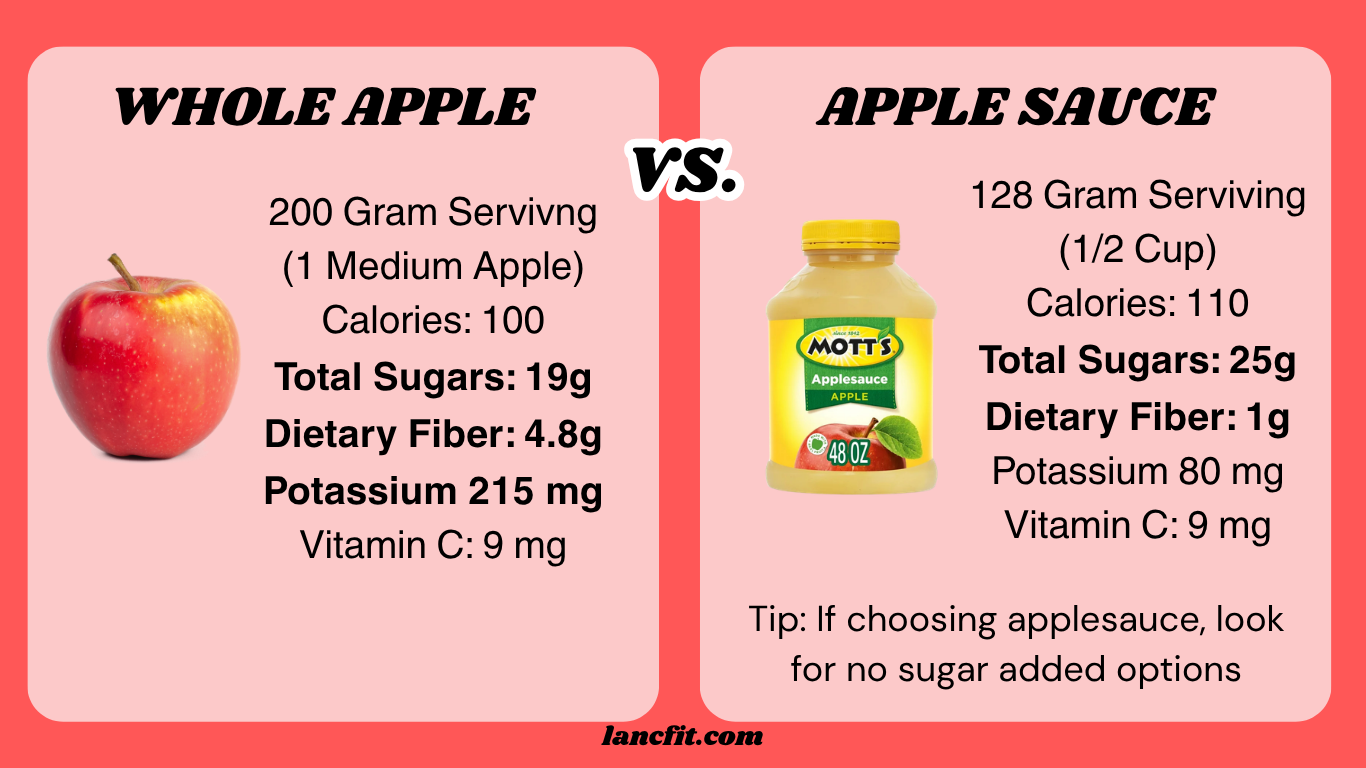
Whole Apple Vs. Applesauce: Nutrition Facts
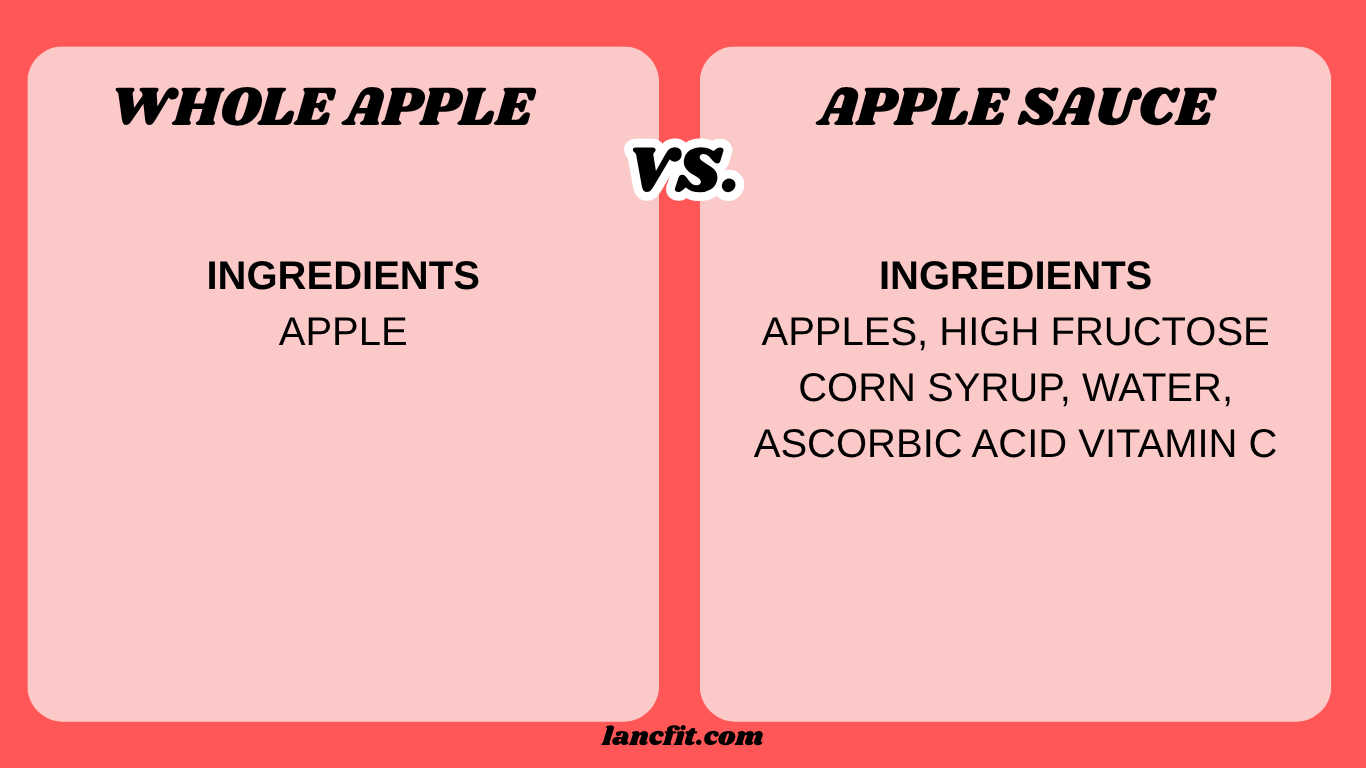
Whole Apple Vs. Applesauce: Ingredient Difference
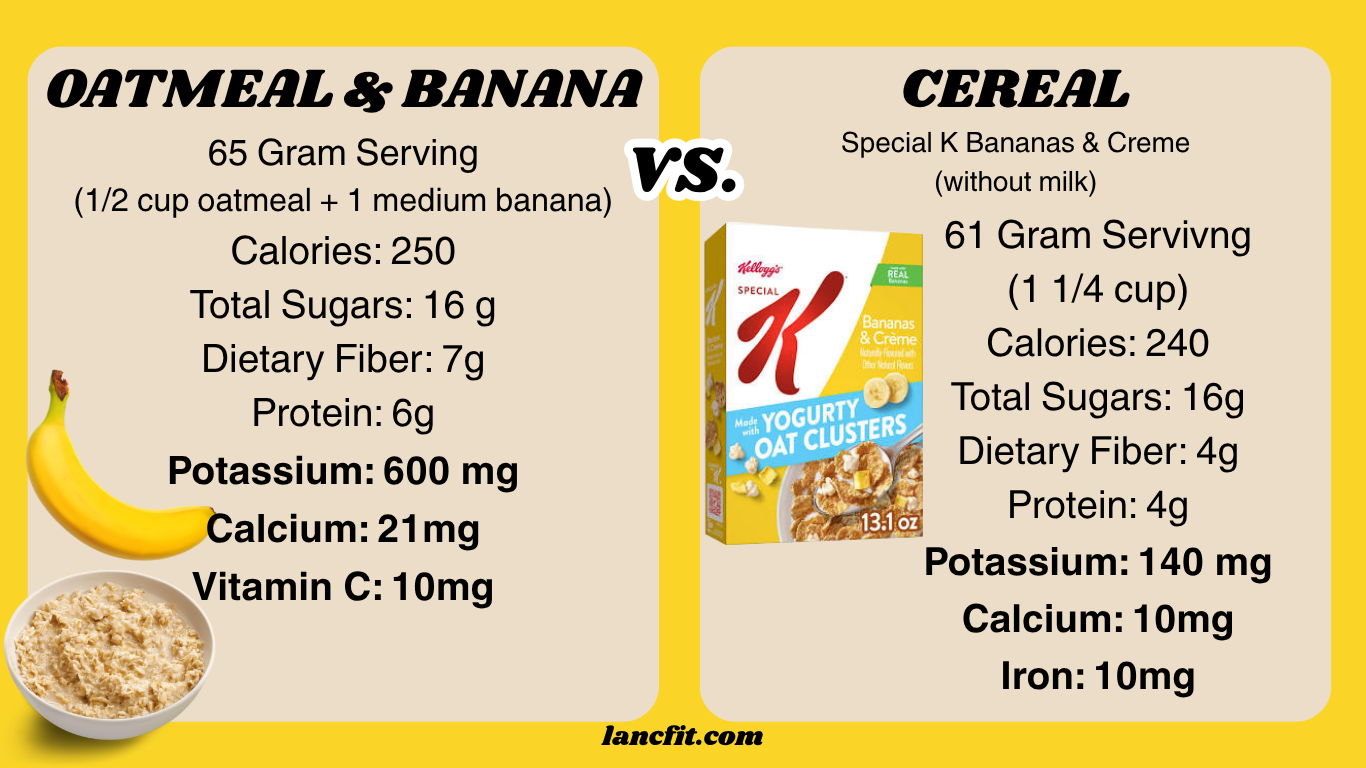
Oatmeal and Banana vs Cereal: Nutrition Facts
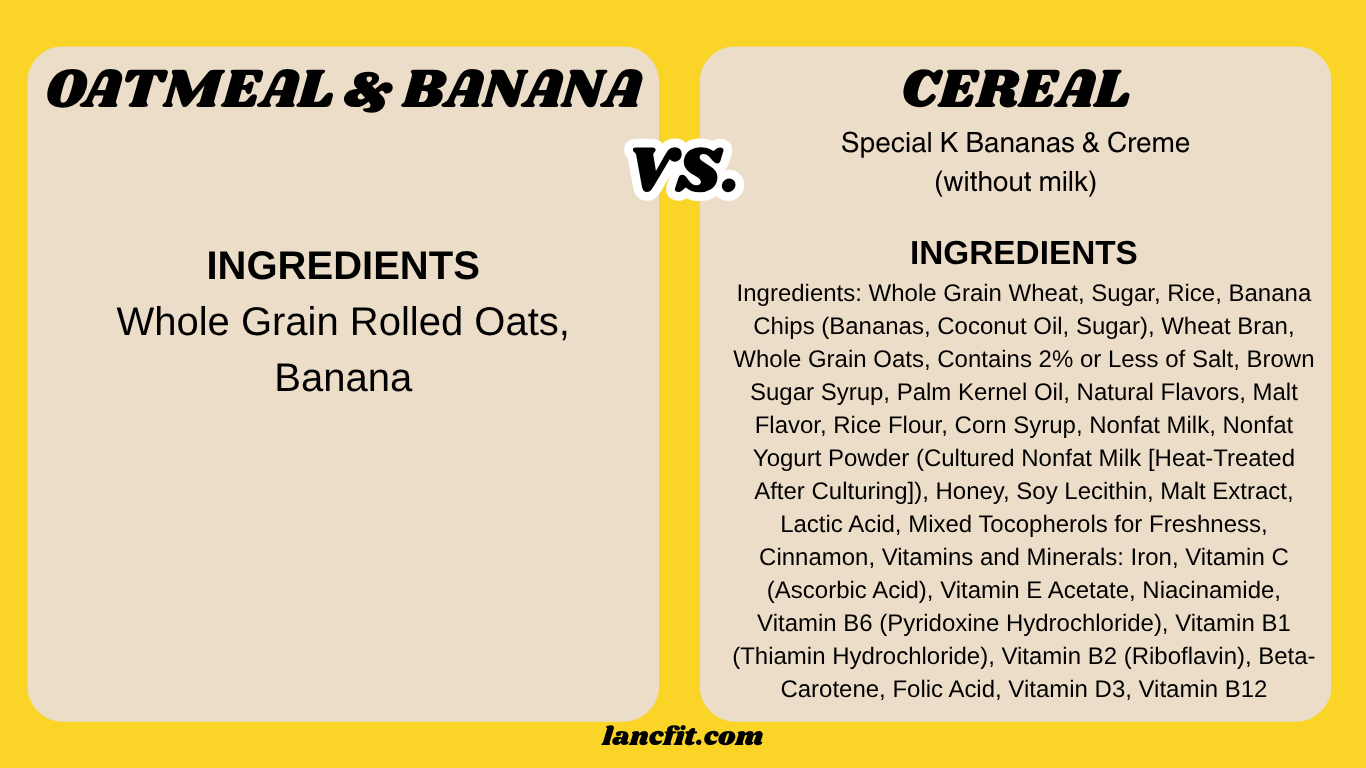
Oatmeal and Banana vs Cereal: Ingredient Difference
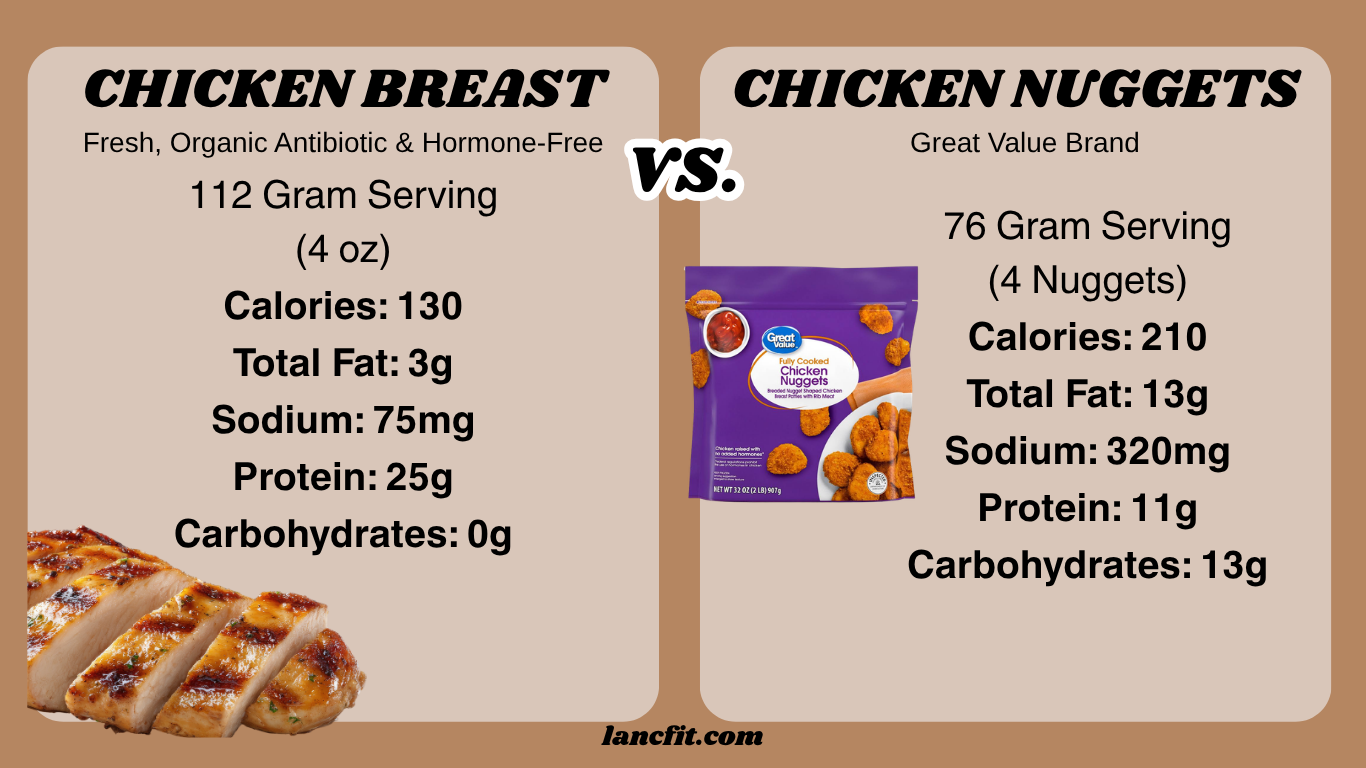
Chicken Breast vs Chicken Nuggets: Nutrition Facts
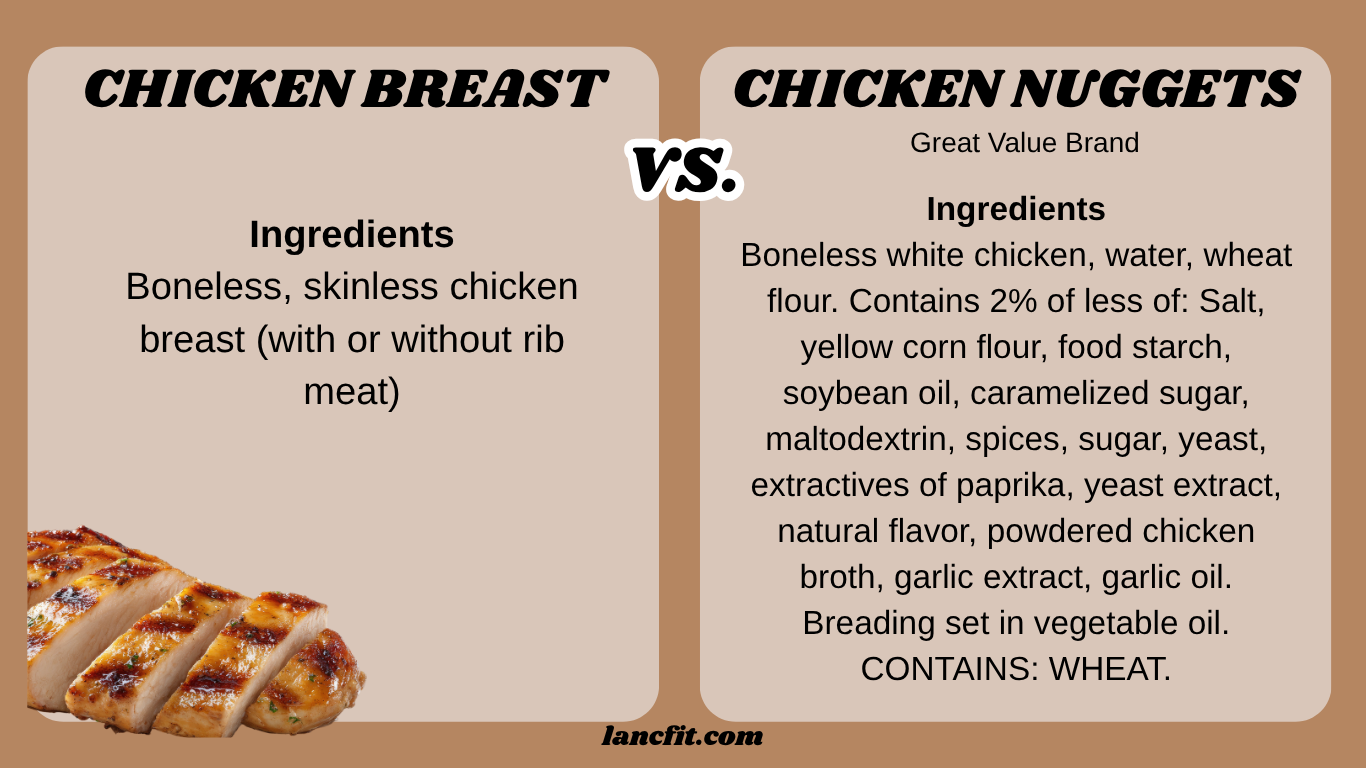
Chicken Breast vs Chicken Nuggets: Ingredients
Benefits of choosing Whole Foods
Choosing whole foods as the foundation of your diet can provide a wide range of health benefits.
More Nutrients: Whole foods are naturally rich in vitamins, minerals, healthy fats, protein, and other beneficial compounds that help your body function at its best without relying on added sugars or unnecessary ingredients.
Higher Fiber Intake: Fruits, vegetables, legumes, and whole grains are excellent sources of dietary fiber, which supports healthy digestion, promotes fullness, helps regulate blood sugar, and contributes to heart health.
Supports Gut Health: A diet rich in a variety of whole foods nourishes the beneficial bacteria in your digestive tract. A healthy gut microbiome plays an important role in digestion, immune function, and overall well-being.
About the Author
Hayley Kauffman, LPN is a Licensed Practical Nurse and NASM Certified Personal Trainer and Nutrition Coach with a passion for helping people improve their health through evidence-based fitness, nutrition, and sustainable lifestyle habits. She believes lasting results come from building realistic routines that fit each person's unique goals and lifestyle.
Educational Disclaimer
The information provided in this article is for educational and informational purposes only and is not intended as medical advice. It should not be used to diagnose, treat, cure, or prevent any disease or medical condition. Always consult your physician or another qualified healthcare provider before beginning any new exercise, nutrition, or wellness program, especially if you have any underlying health conditions or concerns.
references
Amidor, T. (2021, July 8). Here's how whole milk and dairy can be part of your healthy eating plan. American Dairy Association North East. https://www.americandairy.com/dairy-diary/heres-how-whole-milk-and-dairy-can-be-part-of-your-healthy-eating-plan/
American Diabetes Association. (2025, February 21). Fresh versus frozen fruits and vegetables. Diabetes Food Hub. https://diabetesfoodhub.org/blog/fresh-versus-frozen-fruits-and-vegetables
Harvard T.H. Chan School of Public Health. (n.d.). Processed foods and health. The Nutrition Source. Retrieved July 26, 2026, from https://nutritionsource.hsph.harvard.edu/processed-foods/
New York City Department of Health and Mental Hygiene. (n.d.). Whole foods. NYC Health. https://www.nyc.gov/site/doh/health/health-topics/whole-foods.page
Visioli, F., & Martelli, A. (2025). Whole foods: The source of health and longevity. Nutrition Reviews. Advance online publication. https://doi.org/10.1093/nutrit/nuaf080
Woods, D. (2025, April 22). Shop the grocery store perimeter – For your health. Welia Health. https://www.weliahealth.org/2025/04/shop-the-grocery-store-perimeter-for-your-health/
