updated Dietary Guidelines for Americans
On January 7th 2026, the 10th edition of the Literary Guidelines for Americans was released.
What’s changed, what are the controversies, and what is agreed?
whats changed?
-
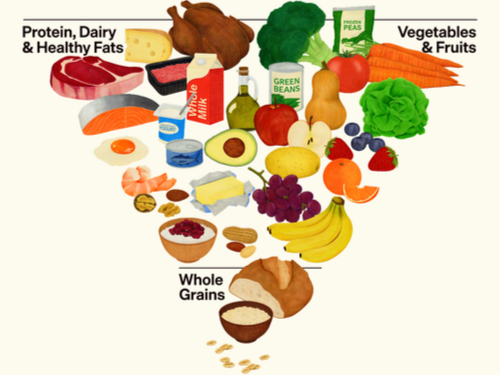
Protein recommendations have nearly doubled in the updated guidelines, suggesting a daily intake of 1.2 to 1.6 grams per kilogram of body weight (Kennedy et al., n.d.)
-
Previous guidelines were lenient on added sugar, but new guidance advises that no amount of added sugars or non-nutritive sweeteners is recommended as part of a healthy diet. (Kennedy et al., n.d.)
-
The 2025 Dietary Guidelines note that highly processed foods harm health. They advise avoiding overly salty or sweet packaged, prepared, or ready-to-eat items and sugar-sweetened drinks (soda, fruit drinks, energy drinks). (Kennedy et al., n.d.)
-
Guidance recommends getting most fats from whole foods—meat, poultry, eggs, omega‑3 seafood, nuts, seeds, full‑fat dairy, olives, and avocados—and using nutrient‑dense oils like olive oil when cooking. (Kennedy et al., n.d.)
-
Prioritize fiber-rich whole grains and avoid highly processed refined carbs like white bread, packaged breakfast items, flour tortillas, and crackers. (Kennedy et al., n.d.)
Controversies and criticism
A recent article published by Stanford Medicine states that the new guidelines place to much emphasis on protein (as most Americans already get enough), and not enough attention was placed on fiber (which many people lack and need for long-term health). (What the 2025–2030 Dietary Guidelines Get Right—and Where They Fall Short, 2026b)
An article published by the Physicians Committee raise concerns that while the new guidelines have a limit on saturated fat consumption; foods like cheese, full-fat dairy, butter, and red meat are highly promoted, creating a confusing and contradictory message. (Physicians Committee for Responsible Medicine, n.d.)
The Physicians Committee has also claimed alleged unlawful industry influence in the creation and publishing of the new guidelines. (Physicians Committee for Responsible Medicine, n.d.)
WHAT CAN BE AGREED ON?
Importance of fruits and vegetables in the diet
Limit alcohol intake
Avoid intake of highly processed foods
Choosing whole grains over refined grains
